Figueroa Street tunnels
Four Art Deco tunnels from the 1930s — a 1920s mountain road swallowed whole by the freeway.
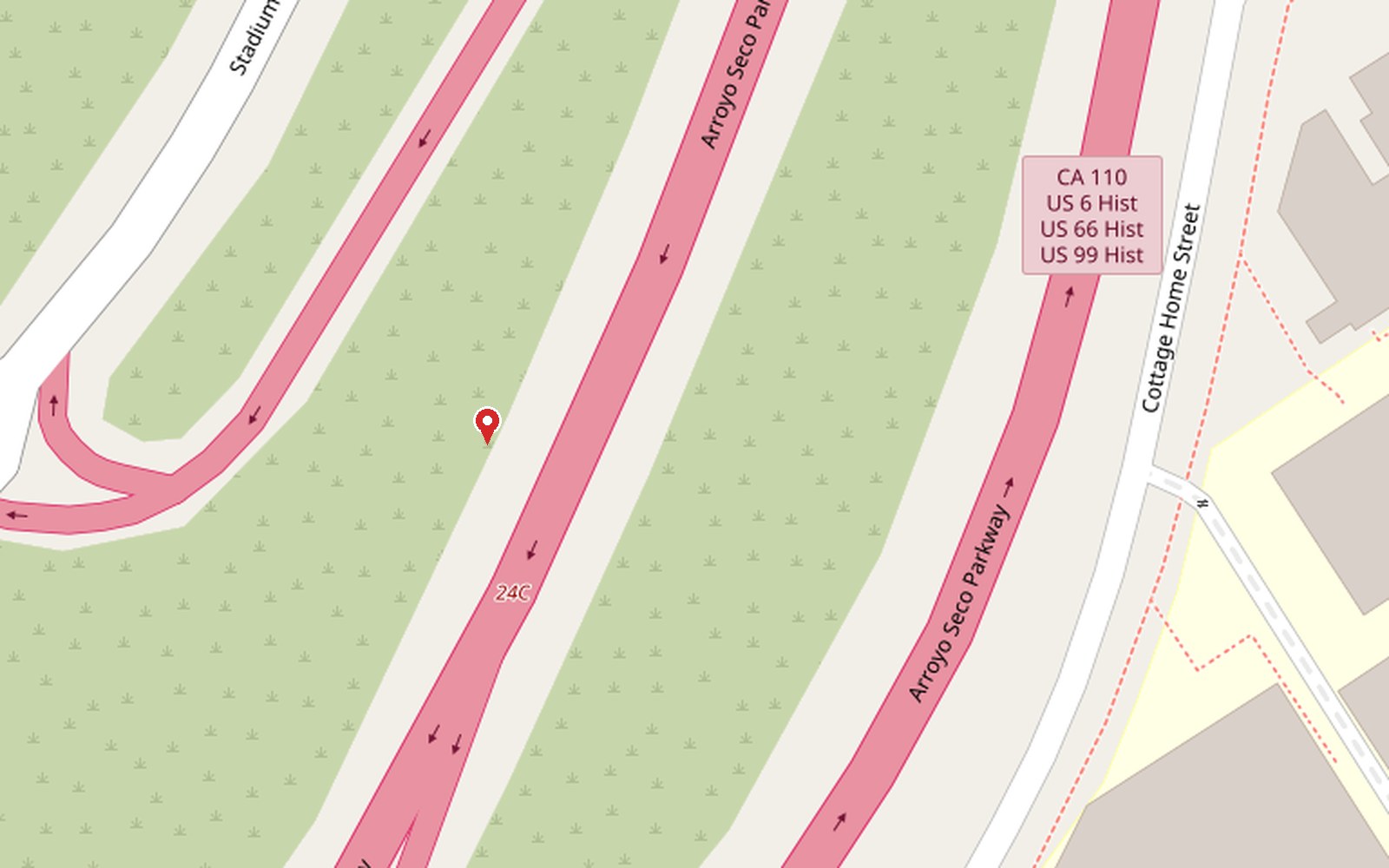
Key facts
- There are four Figueroa Street tunnels, now carrying northbound SR-110 / the Arroyo Seco Parkway; the northern three opened in 1931 and the fourth and longest in 1936.
- They were engineered by Merrill Butler with Art Deco portals — ornamental lamps and a stylized Seal of Los Angeles set above each mouth.
- Built for an ordinary city street, they later carried US Route 66 and two-way traffic before becoming the one-way northbound lanes of the parkway — which is why a "freeway" suddenly feels like a 1930s mountain road.
Narration transcript
Feel the road close in around you — you're going through the Figueroa Street tunnels, and these are older than the freeway that now runs through them. There are four of them. The three up ahead opened in 1931, and the long one opened in 1936, so you're driving through something from the age of Art Deco. If you can catch a glimpse of the tunnel mouths, look for the decorative lamps and the stylized city seal set above each one — nobody decorates a freeway tunnel like that anymore.
Here's the strange part. These weren't built for a freeway at all. They were bored for plain old Figueroa Street, back when this was a two-way city road climbing out toward Pasadena, and for years they even carried Route 66. When the parkway came through, it simply swallowed the tunnels whole and made them its northbound lanes. That's why this stretch feels so unlike a modern freeway — narrow, low, curving, no shoulder. You're not imagining it. You're driving a 1930s road that got promoted.