Four Level Interchange — The Stack
The world's first four-level stack interchange — 1949, and the moment the modern freeway knot was invented.
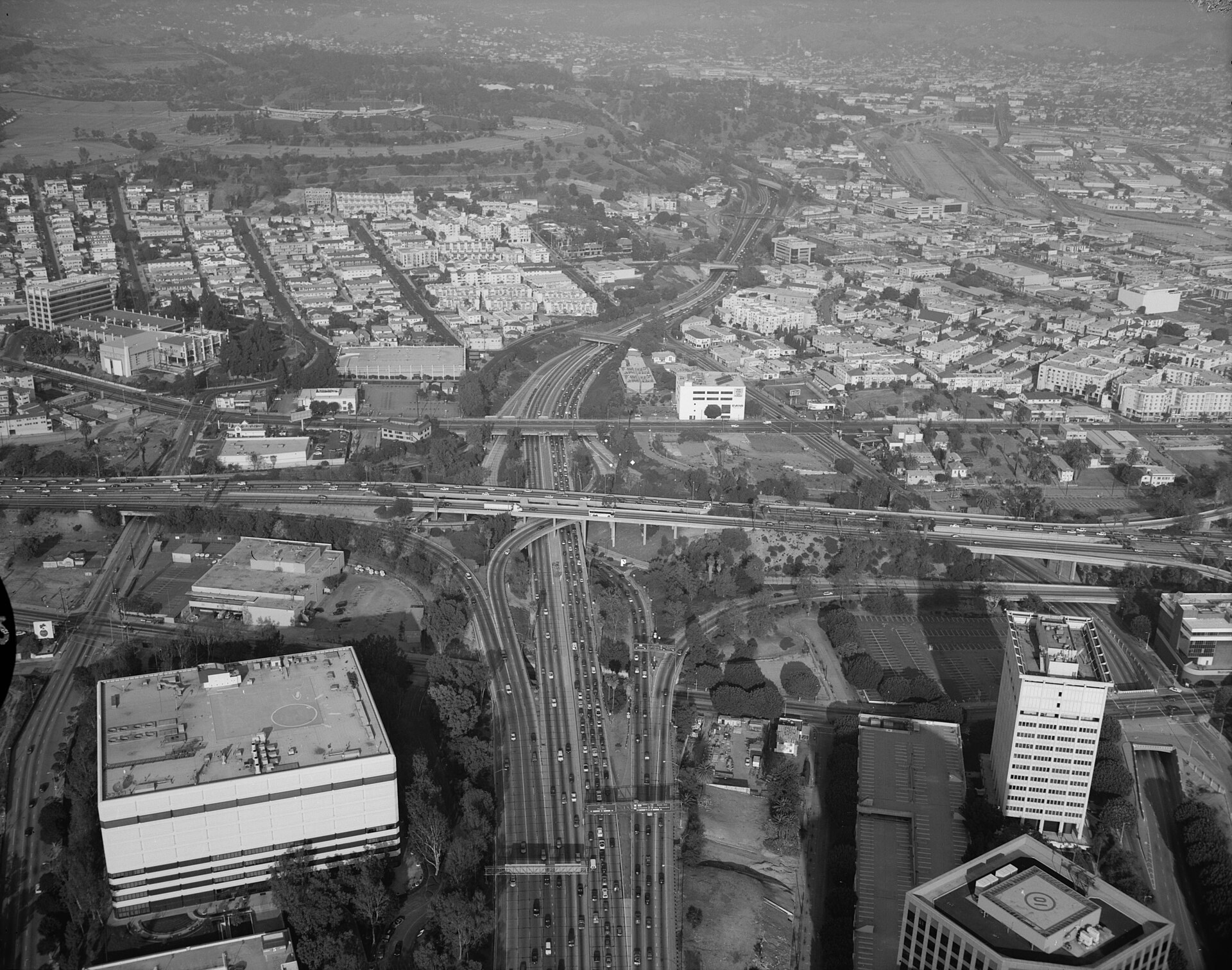
Key facts
- The Four Level Interchange where the 110 crosses US-101 is the first four-level (stack) interchange in the world — the model for every stacked freeway knot since.
- Its structure was completed in 1949, but it wasn't in full use until September 22, 1953, when the freeways feeding it opened — and it was renamed the Bill Keene Memorial Interchange in 2006.
- Here the Harbor Freeway ends and the Arroyo Seco Parkway begins — you are crossing from the newest-feeling part of the drive onto its oldest.
Narration transcript
The tangle of ramps rising and diving around you right now is not just any interchange — it's the one that started them all. This is the Four Level, where the 110 meets the 101, and when it was built it was the first four-level stack interchange anywhere in the world. Before this, freeways met at grade, with traffic lights and stop signs. Here, in 1949, engineers stacked the turning traffic onto four separate decks so nothing ever has to stop or cross — the idea you've driven through ten thousand times without thinking about it was invented right here, in concrete, first.
It took until 1953 for all the connecting freeways to open and the thing to work the way it was meant to. Officially it's now named the Bill Keene Memorial Interchange, though almost nobody calls it that. Notice how tight and low the curves feel compared to a modern interchange — that's because this is the prototype, built when nobody had done it before. And it marks a border: behind you, the Harbor Freeway; ahead, the oldest freeway in the West.