Arroyo Seco Parkway
Opened 1940 — the first freeway in the West, and a civil-engineering landmark you're driving on.
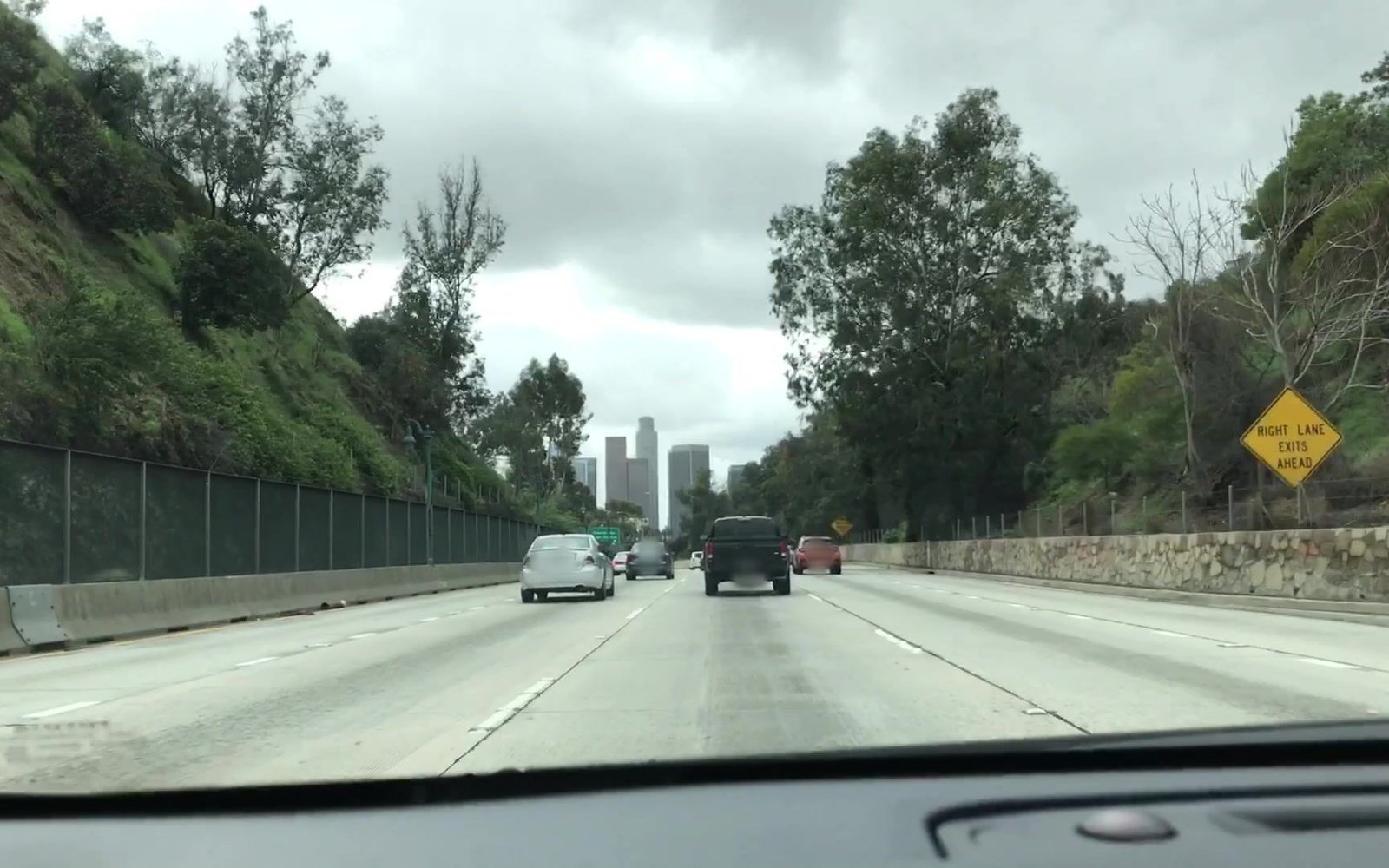
Key facts
- The Arroyo Seco Parkway (SR-110 north of the Four Level) opened December 30, 1940 and is recognised as the first freeway in the American West / west of the Mississippi — avoid "first in the US," which is contested.
- It is both a National Scenic Byway (2002) and a National Civil Engineering Landmark — a road preserved as a historic object in its own right.
- Its 1940s design shows — tiny ramps with almost no acceleration lane, gentle curves, no shoulder — because it was built before anyone knew what a freeway was supposed to be.
Narration transcript
Out of the tunnels, and now the road opens up and runs beside a concrete channel and a ribbon of green — this is the Arroyo Seco Parkway, and it is the headline of the whole drive. It opened in December 1940, and it was the first freeway in the American West — the first anywhere out here to let cars move without stop signs or cross traffic. Think about that: the idea of the freeway, the thing Los Angeles is famous for, started on this exact piece of pavement.
It's so important as a piece of engineering history that it's protected twice over — named a National Scenic Byway and a National Civil Engineering Landmark. You don't usually preserve a freeway like a monument, but this one earned it. And you can feel its age in how it drives: the on-ramps are almost comically short, there's barely a shoulder, the curves are gentle and old-fashioned. It was built in 1940, before anyone had figured out the rules. You're driving the first draft.