Jingūbashi (the bridge)
The bridge where the whole world watched Harajuku — before we go where Harajuku was made.
Key facts
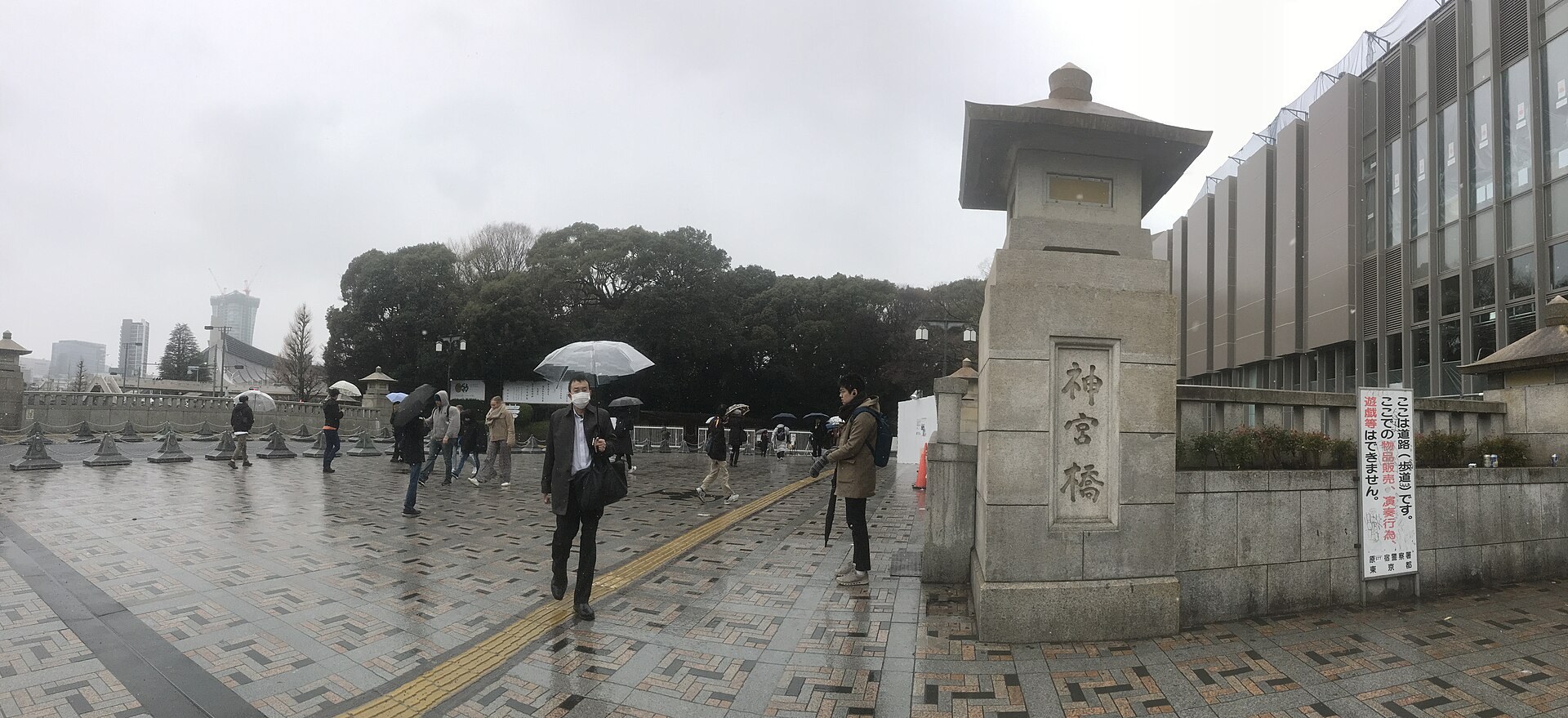
- Jingūbashi is the bridge beside Harajuku Station, linking the station to the entrance of Meiji Shrine across the JR Yamanote line.
- From the late 1990s into the 2000s, its Sunday gatherings of cosplayers and “Harajuku girls” became the image the world knew as Japanese street fashion.
- The Sunday “pedestrian paradise” that turned the area into a youth stage ran from 1977 to 1998; the bridge scene outlived it.
Narration transcript
Start here, on the bridge. You're standing on Jingubashi, the wide span beside Harajuku Station that carries people over the train tracks toward the great wooded gate of Meiji Shrine. Pause a moment and look around, because this unassuming crossing is where the whole world first met Harajuku.
For years, through the late nineteen-nineties and into the two-thousands, this bridge was the stage. Every Sunday it filled with young people in astonishing homemade outfits — gothic, frilled, cartoonish, brilliant — and with the photographers who came to capture them. The pictures that ran in magazines from Paris to New York, the ones that taught the world the phrase Harajuku street fashion, were very often taken right here, on this bridge.
But here's the thing. A bridge is a place you get looked at. The cameras came, the crowds gathered, and Harajuku became something the world watched from the outside. That's the front of the story — the spectacle, the pose, the photograph.
What the cameras never showed is where any of it was actually made. The clothes, the ideas, the food that fed the crowds — those were born in the lanes behind you, in the quiet back of this neighborhood that almost no visitor turns into.
So we're going to do the one thing the Sunday crowds never did. We're going to turn around and walk into the back. Leave the bridge and head north a short way, toward the entrance of the most famous shopping street in Tokyo — the mouth of Takeshita-dori.