Theatre row — the Five Playhouses & the Shōchiku-za
Before the neon, this canal was Japan's Broadway — and the puppets here made grown adults weep.
Key facts
- The Tokugawa shogunate designated Dōtonbori as Osaka's licensed entertainment district in 1621; by the 1660s the avenue held a row of kabuki houses and bunraku (puppet) theatres — the famous “five great playhouses.”
- The playwright Chikamatsu Monzaemon's The Love Suicides at Sonezaki debuted at the Takemoto-za here in 1703.
- WWII air raids destroyed Dōtonbori's theatres — all but the Shōchiku-za, which opened in 1923 as Osaka's first full Western-style theatre. After carrying the district for a century, Shōchiku announced in 2026 the end of its performances and the building's demolition.
- Its neighbour the Naka-za gave its last performance in 1999; a gas explosion during its demolition in 2002 burned the site.
Narration transcript
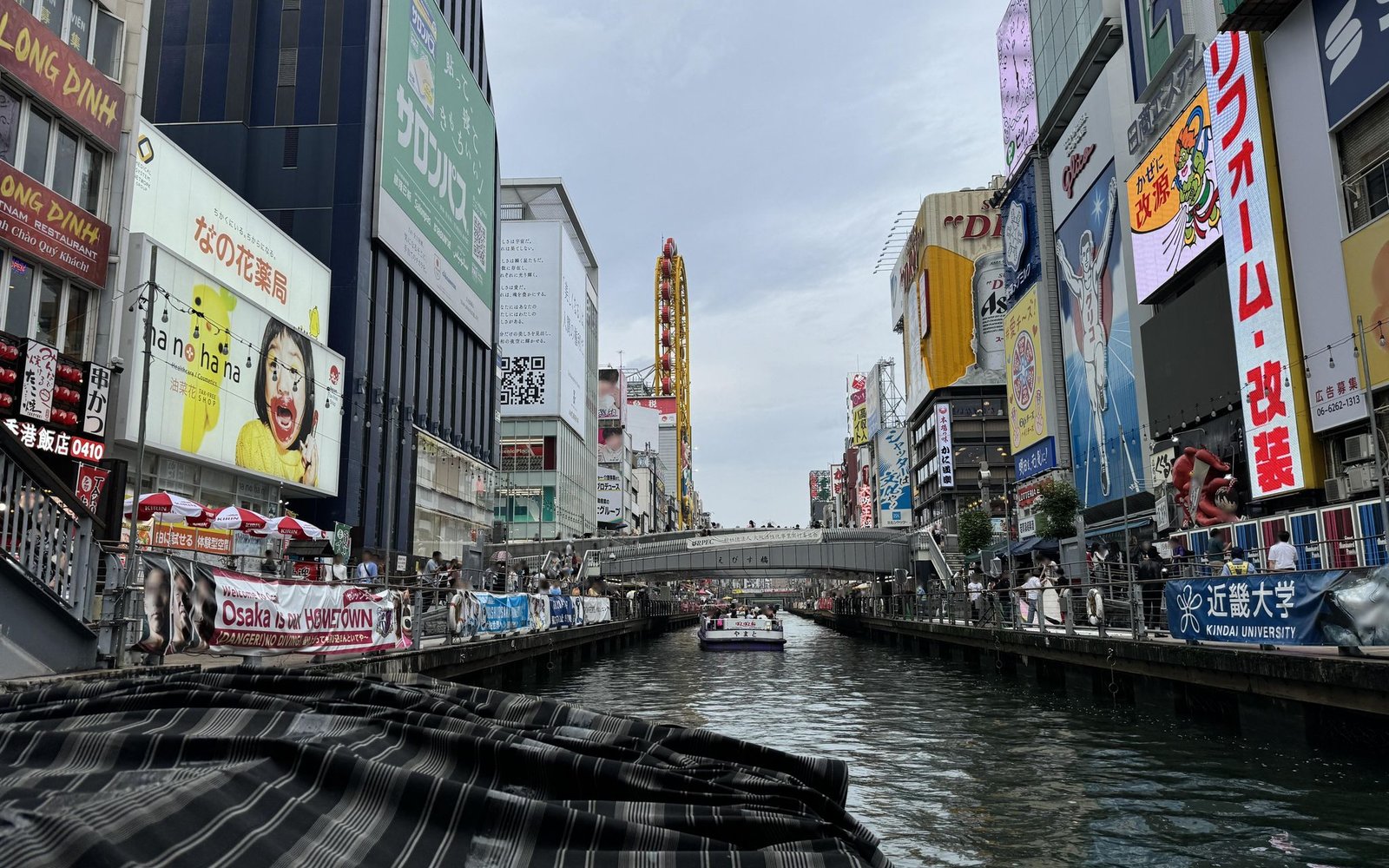
Before this was a street of screens, it was a street of stages — Japan's Broadway, four hundred years early. In 1621 the shogunate pointed at this canal and said, essentially, put the theatres here. Within a couple of generations Dōtonbori had a whole row of them: kabuki houses, and puppet theatres running bunraku — half-life-size puppets worked by three handlers each, so expressive that audiences forgot they were wood. On these stages the great playwright Chikamatsu staged doomed lovers and tragic merchants; his most famous play premiered right here in 1703, and people came out shaken.
Then the twentieth century was hard on theatre row. The firebombing of Osaka in 1945 took almost all of these houses. The one that lived through the war is the pale, grand building set back from the water on your right — the Shōchiku-za, opened in 1923, Osaka's first great Western-style theatre. For a century it carried the torch for this whole district. Its neighbor the Naka-za wasn't so lucky — it closed in 1999, and during demolition in 2002 a gas explosion burned the site to the ground. Theatre row remembers. Keep that in mind as the neon takes over.