Ebisu-bashi & the Glico Running Man
One glowing runner, arms thrown up in victory, since the 1930s — strike the pose; everyone does.
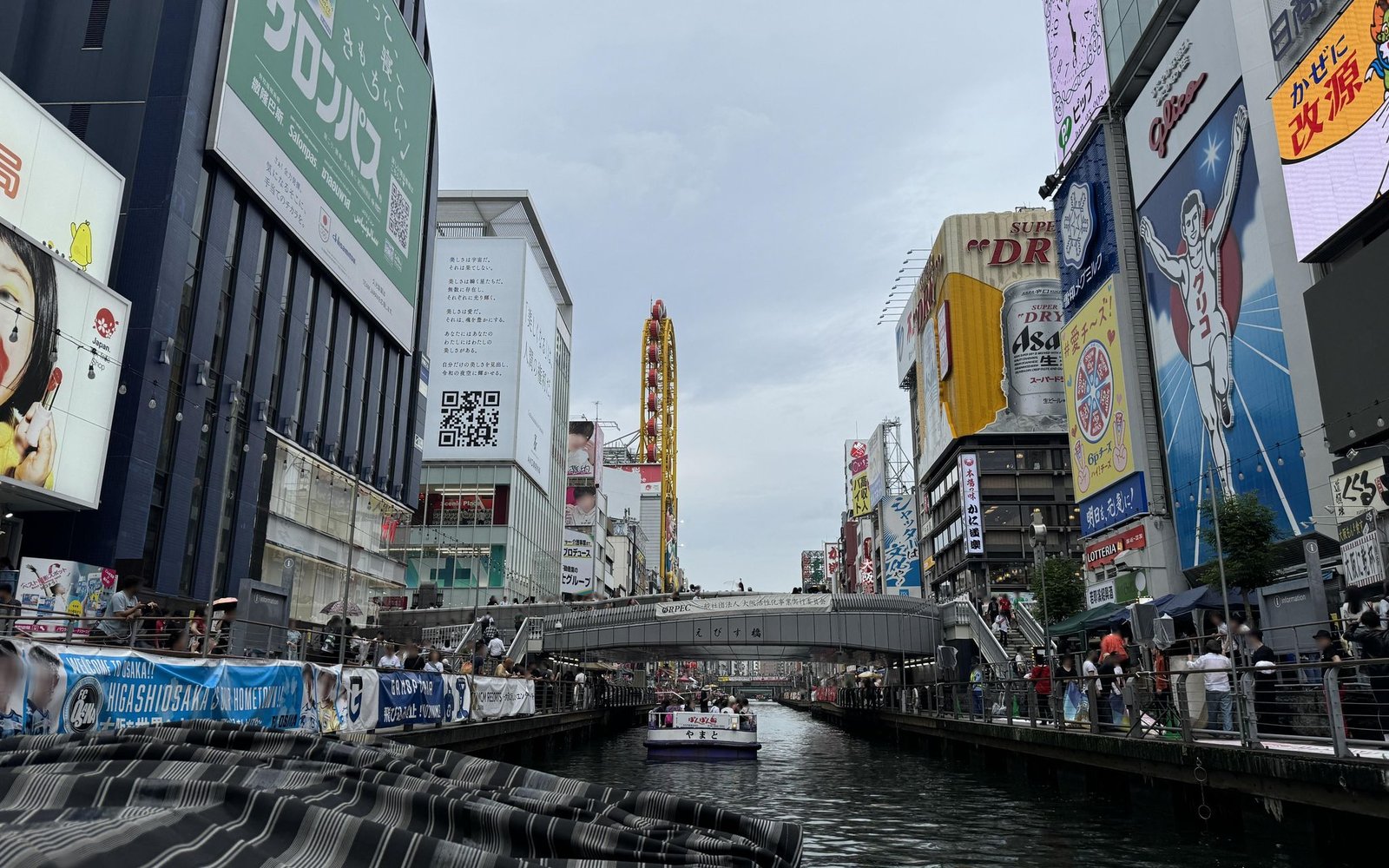
Key facts
- Ebisu-bashi is the iconic central hub bridge of Dōtonbori; the current span was rebuilt in 2007.
- The Glico “Running Man” sign — a runner with arms raised in victory — first lit the canal in the 1930s. It is now in its sixth generation, an LED display switched on in 2014.
- Travellers pose beneath it, arms up, mimicking the runner.
- The bridge and district have appeared on screen, from Ridley Scott's Black Rain (1989) to John Wick: Chapter 4.
Narration transcript
This is it — the center of it all. Ebisu-bashi, the bridge everyone means when they say “Dōtonbori,” and above it, the sign everyone means when they say “Osaka”: the Glico Running Man.
Look up and to the side and there he is — a runner, mid-stride, arms thrown straight up like he's just won. He's been crossing that finish line, in one form or another, since the 1930s. The version glowing tonight is the sixth, switched over to a hundred and forty thousand LEDs back in 2014, but the pose has never changed in ninety years. And there's a rule here, unwritten but absolute: you stop on this bridge, you throw your own arms up, and somebody takes the photo. Go on. Everyone does.
The bridge under you was rebuilt in 2007, but people have been meeting on an Ebisu-bashi for centuries — it's named for the nearby Ebisu shrine, and it's been a pick-up spot so notorious the locals nicknamed it “the hook.” If it all feels weirdly cinematic, it should: this stretch has turned up on screen from Ridley Scott's Black Rain to John Wick. You're standing in Osaka's cover photo. Take your shot, then let's keep east.