Old Las Vegas Mormon Fort
The 1855 adobe fort at the springs — “the meadows” that a whole neon city grew out of.
Key facts
- The Old Las Vegas Mormon Fort, built starting in 1855 by Mormon missionaries, is the oldest non-Native (Euro-American) building in Nevada and is preserved as a state historic park.
- “Las Vegas” is Spanish for “the meadows,” a name for the artesian spring-fed grasslands here; the springs were noted by early travelers on the Old Spanish Trail — Rafael Rivera, a scout, is often credited as the first non-Native to reach the Las Vegas Springs, around 1829.
- Those springs made the site a watering stop that grew into a railroad town and, eventually, the modern city — the water story continued today at the Springs Preserve.
Narration transcript
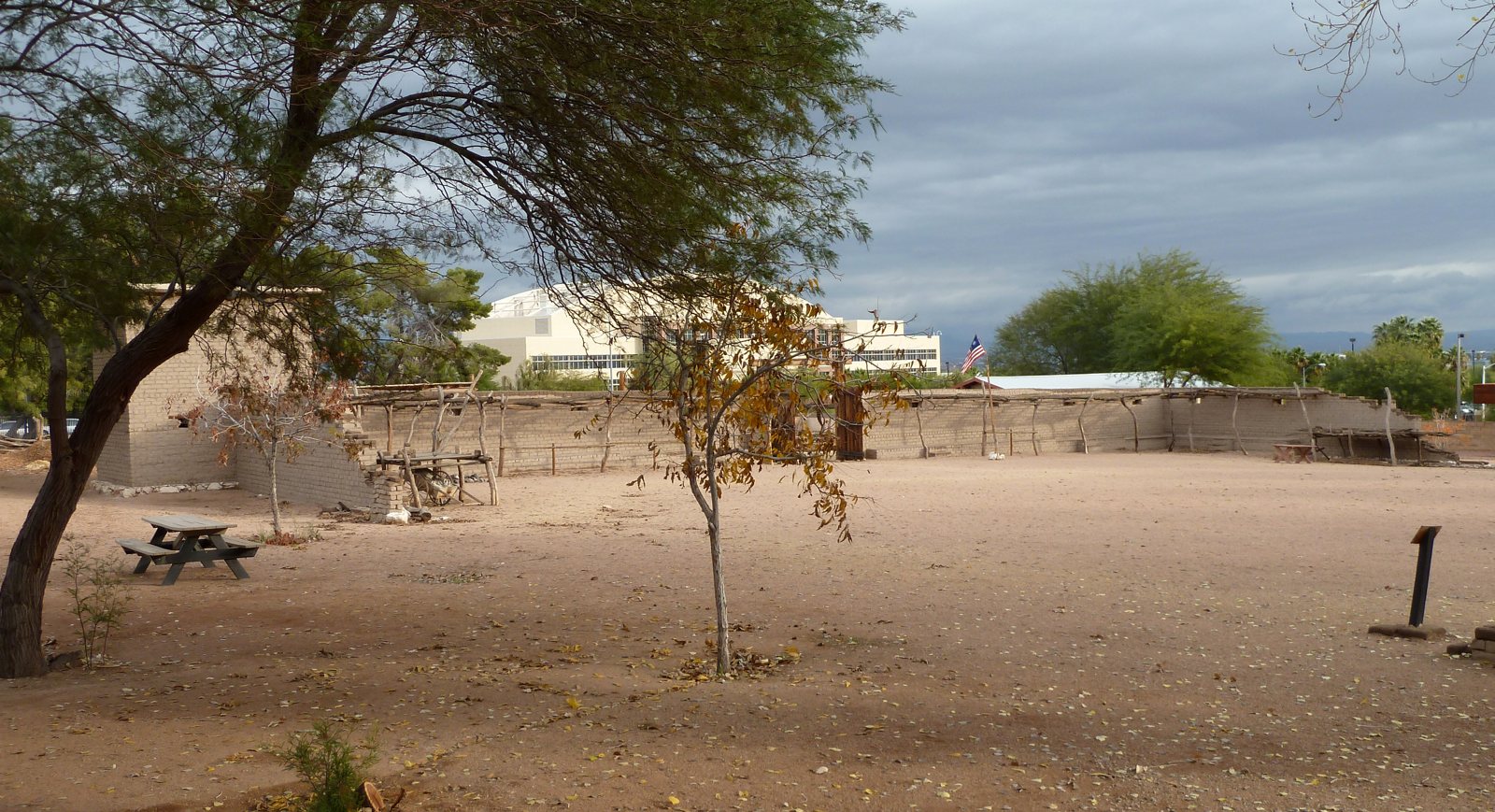
On your right, at Washington Avenue, is something that looks almost impossibly humble next to everything you've just driven: a low adobe wall and a couple of simple buildings. This is the Old Las Vegas Mormon Fort, built starting in 1855 — and it is the oldest non-Native building in the entire state of Nevada. No neon, no gold leaf. Just sun-dried mud brick, and the actual root of the whole story.
Here's the beautiful part. “Las Vegas” isn't a glamorous name at all — it's Spanish for “the meadows.” Long before the casinos, this was green: spring-fed grasslands in the middle of the desert, a rare place with water. Travelers on the old trail from Santa Fe to California stopped here to drink, and a scout named Rafael Rivera is often credited as the first outsider to reach these springs, around 1829. The Mormons built this fort by the water in 1855, the railroad came for the same water, and a town grew up around the watering stop. Every fountain and canal and dancing lake you've seen today traces back to this one wet spot in the sand.
This is your second optional stop, and the northern tip of the tour — the finish line is just to the west now.
So here's the way there. From the fort, head west on Washington Avenue, then turn left — south — onto Main Street, and then right — west — onto Bonanza Road. Follow Bonanza west, away from the bright lights, into the neighbourhood that Las Vegas history usually skips. About a mile down, on your right, is one last empty lot — and it holds the most important story on this whole drive, and the one that closes the circle we started at the sign.