Historic Westside — Jackson Avenue
The neighborhood segregation built — and the "Westside Strip" the community built right back.
Key facts
- Redlining and restrictive covenants confined Black residents to West Las Vegas, west of the railroad/I-15; the Westside became the center of Black life in the valley.
- Black entertainers headlined Strip showrooms but were barred from lodging, dining or gambling in those same hotels, so they stayed and socialized on the Westside.
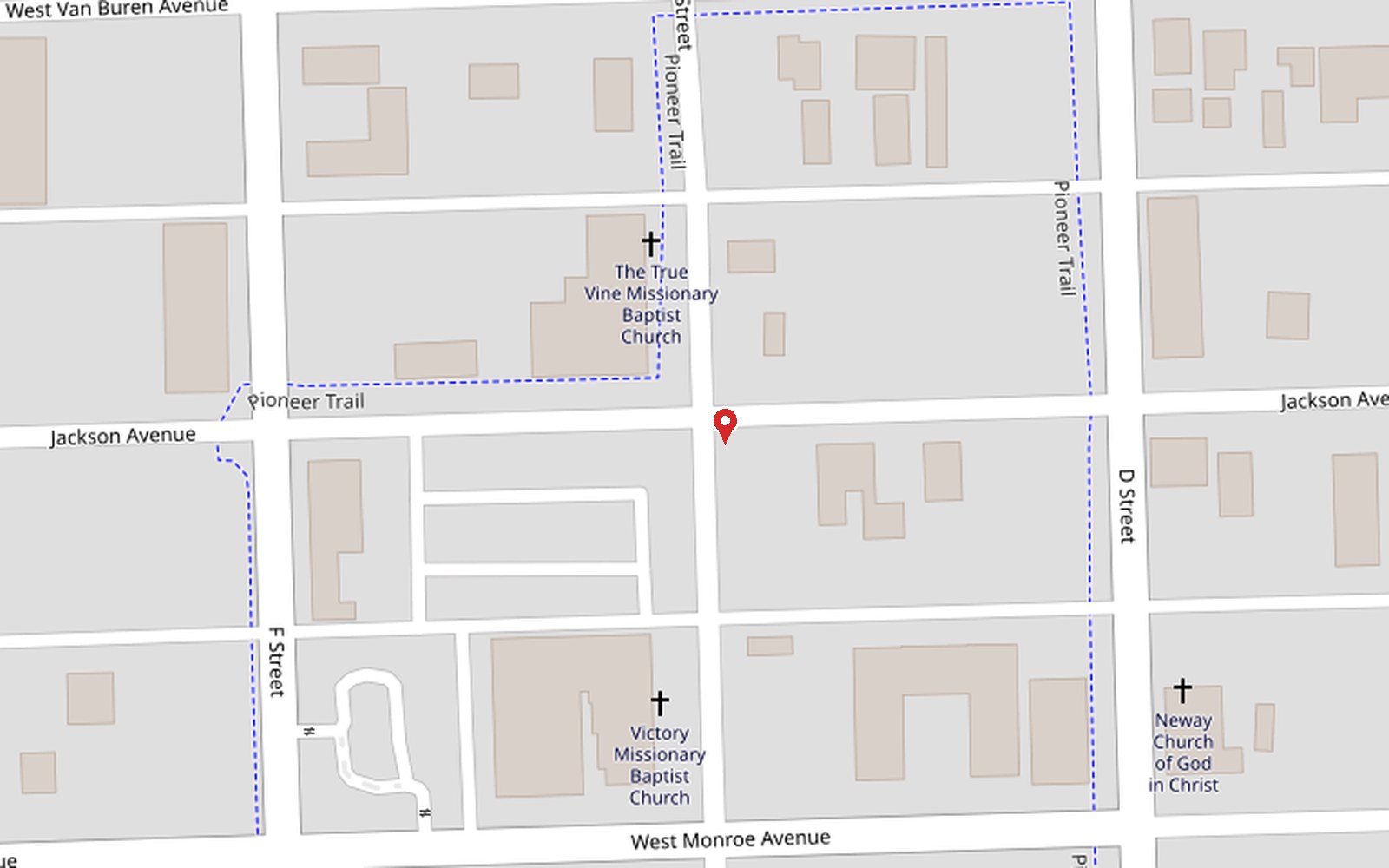
- Jackson Avenue was the corridor's commercial and nightclub heart — nicknamed the "Westside Strip" — home to clubs including the Cotton Club (500 Jackson, 1944–1957), the Town Tavern, El Morocco and Club Ebony.
- Harrison House (Harrison's Guest House), 1001 F St, built 1942, boarded touring Black stars — Sammy Davis Jr., Nat King Cole, Pearl Bailey — and still stands (NRHP-listed 2016); the corridor around it is now largely vacant lots under a city revitalization effort.
Narration transcript
Take this next stretch slowly, and gently — people live and remember here. You're crossing into the Historic Westside, and to read it you have to know why it exists. For decades, Las Vegas kept its Black residents on this side of the railroad tracks by law and by covenant. This is the neighborhood segregation built.
Here's the part that stops you cold. The great Black performers of the era — headliners the Strip fought to book — packed those showrooms at night, and then were not allowed to sleep, eat or gamble in the very hotels they'd just filled. So they came here. Along Jackson Avenue, the community built its own — a run of clubs locals called the Westside Strip: the Cotton Club, the Town Tavern, Club Ebony, music till dawn.
That corridor is quiet now, mostly empty lots, and the city is working to bring it back. But look for one survivor: Harrison House, on F Street — a guest home from 1942 where Sammy Davis Junior and Nat King Cole stayed, because they had nowhere else. It's still standing.
Keep heading south, toward Bonanza Road. There's one more Westside address you have to see — and it's the one that isn't there anymore.
Song heard here
▶ Straighten Up and Fly Right — Nat King Cole (Nat King Cole Trio - Topic) ↗