← Daly City & South SF Driving Tour
Colma — Colma Historical Association
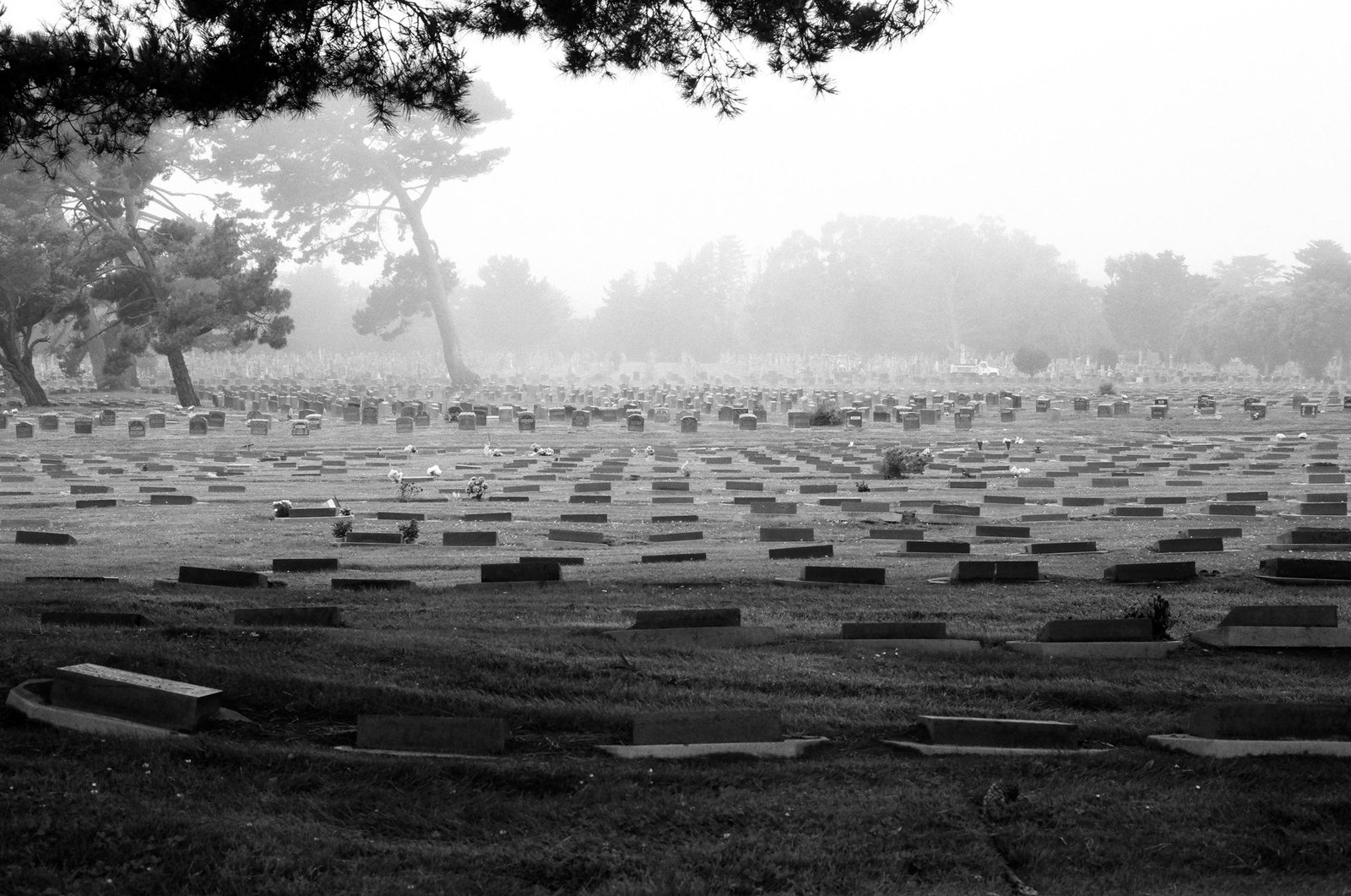
Stop (exterior only) — the town of 1,500 living and 1.5 million dead, where San Francisco sent the graves it evicted.
Key facts
- San Francisco banned new burials within city limits in 1900
- In 1914 the city ordered its existing graves exhumed and moved
- On the order of 1.5 million graves against about 1,507 living residents (2020 Census)
- Official motto: “It's great to be alive in Colma”
- Wyatt Earp, Levi Strauss, Emperor Norton, and Joe DiMaggio are all buried within a mile
Narration transcript
Pull in and park — this is a stop, and it's a respectful one, so we'll stay right here at the Colma Historical Park and never go inside anyone's cemetery. Look around the town, though, because Colma is unlike anywhere else in America. Something like a million and a half people are buried within these few square miles. The number of living residents? About fifteen hundred. The dead outnumber the living roughly a thousand to one — and the town's official motto, with a completely straight face, is “It's great to be alive in Colma.”
Here's how that happened. In 1900, San Francisco banned any new burials inside the city — it wanted the land. Then, in 1914, it went further and ordered the graves it already had dug up and moved out, declaring its own cemeteries a public nuisance. Over the following decades, hundreds of thousands of San Francisco's dead were exhumed and carried down here across the county line, to the one town that would take them. San Francisco evicted its dead, and Colma is where they were resettled.
And what a guest list. Within a mile of where you're parked lie the lawman Wyatt Earp; Levi Strauss, who put the rivets in the blue jean; Emperor Norton, San Francisco's beloved self-declared emperor; and the ballplayer Joe DiMaggio. The whole economy and identity of this town is the thing San Francisco threw away — Colma turned rejection into a permanent civic role, and even makes a wry joke of it.
This little museum beside you tells that story, built right into an old cemetery office and a rescued 1863 train depot. Take a few quiet minutes if it's open. Then we climb back up the ridge — toward a mountain that developers wanted to flatten into the bay, and a butterfly that stopped them.