Naschmarkt + the Secession
Vienna's great market under a golden dome — street food and rebel art, side by side.
Key facts
- The Naschmarkt is Vienna's largest open-air market, nearly 1.5 km of stalls selling cheese, olives, spices, sweets and Austrian, Turkish and Middle-Eastern street food.
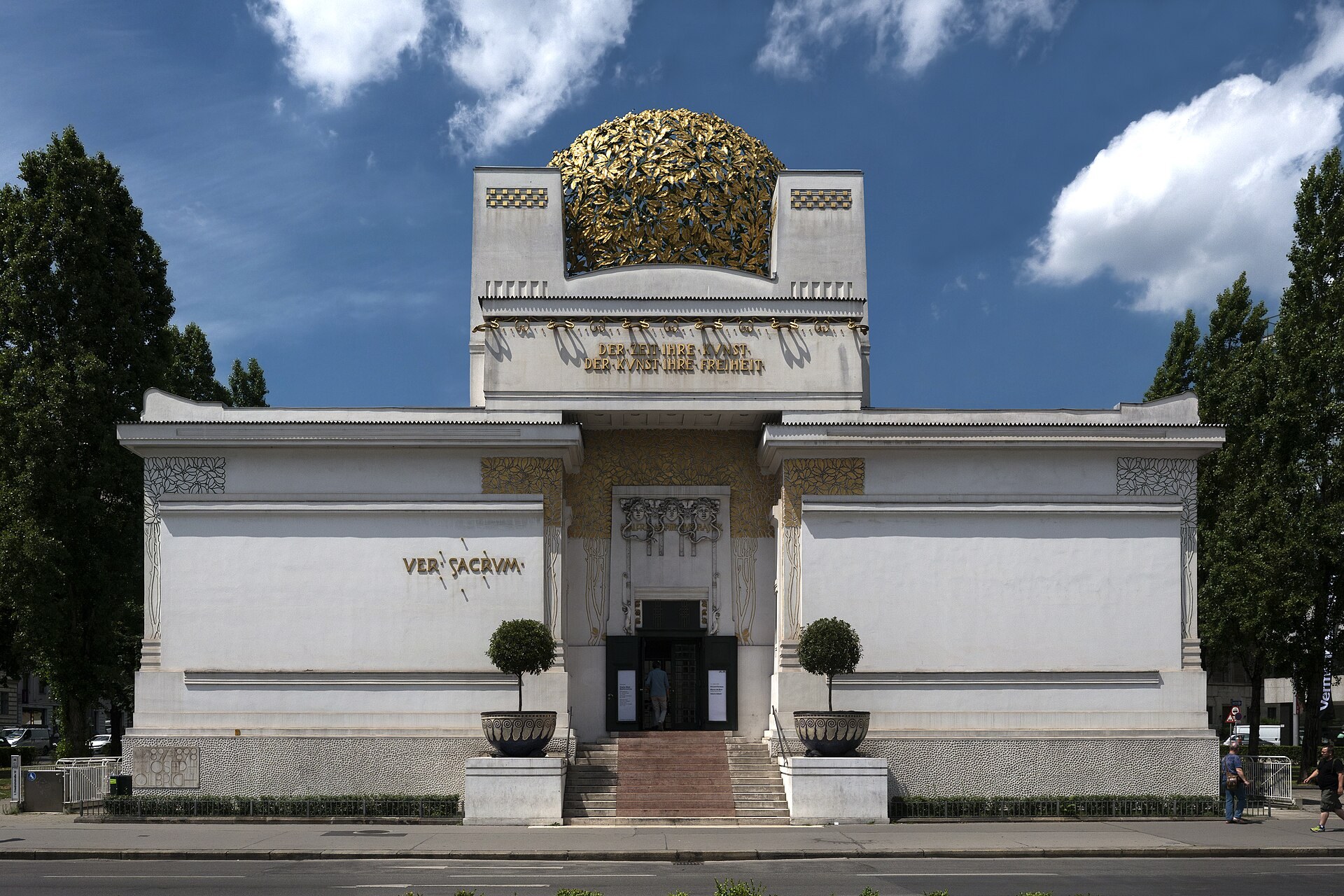
- The Secession building was completed in 1898 by Joseph Maria Olbrich for the artists' movement led by Gustav Klimt; its gilded laurel-leaf dome is nicknamed 'the golden cabbage.'
- Inside hangs Gustav Klimt's Beethoven Frieze (1902); above the door is the movement's motto — 'To every age its art, to art its freedom.'
Narration transcript
Two very different golden things meet here, and you can take in both from where you stand. First, the Naschmarkt — Vienna's great open-air market, a ribbon of stalls running for the better part of a mile along the line of the covered river. This is where Vienna eats the world: pyramids of olives and spices, dripping wheels of cheese, Austrian dumplings beside Turkish and Middle Eastern street food, pickles, honey, sweets, and little stand-up counters where you can taste as you go. It is the delicious, beating heart of the city's appetite, and it's the street-food climax of our whole walk.
Now turn and look up, because right beside the market stands a small white building wearing a crown — the Secession. In eighteen ninety-seven, a group of young artists led by Gustav Klimt broke away from the stuffy official art world to make something new, and the next year they built themselves this manifesto in stone. On top sits a dome of three thousand gilded laurel leaves — the Viennese affectionately call it 'the golden cabbage.' Carved above the door is their battle cry: to every age its art, to art its freedom. Inside, you can still see Klimt's shimmering Beethoven Frieze, painted straight onto the walls.
Market and manifesto, side by side — appetite and architecture in a single glance. If you have time, the stalls run off to the southwest and reward a slow wander. But our walk turns the other way.
When you're ready, cross east over the broad open space of Karlsplatz. Our final stop is waiting there — where Vienna's story steps into the modern age.