Graben / Julius Meinl am Graben
Vienna's Baroque front room — a plague column in gilded stone, and the grocer who fed an empire.
Key facts
- The Graben, Vienna's grand pedestrian boulevard, is laid over the filled-in moat ('Graben' means ditch) of the old city walls.
- Its centrepiece is the high-Baroque Pestsäule, or Plague Column, raised in thanks after the plague of 1679 and completed in 1693.
- Julius Meinl began as a Viennese grocer in 1862 and pioneered selling ready-roasted coffee; its Moor's-head logo became one of Central Europe's best-known marks.
Narration transcript
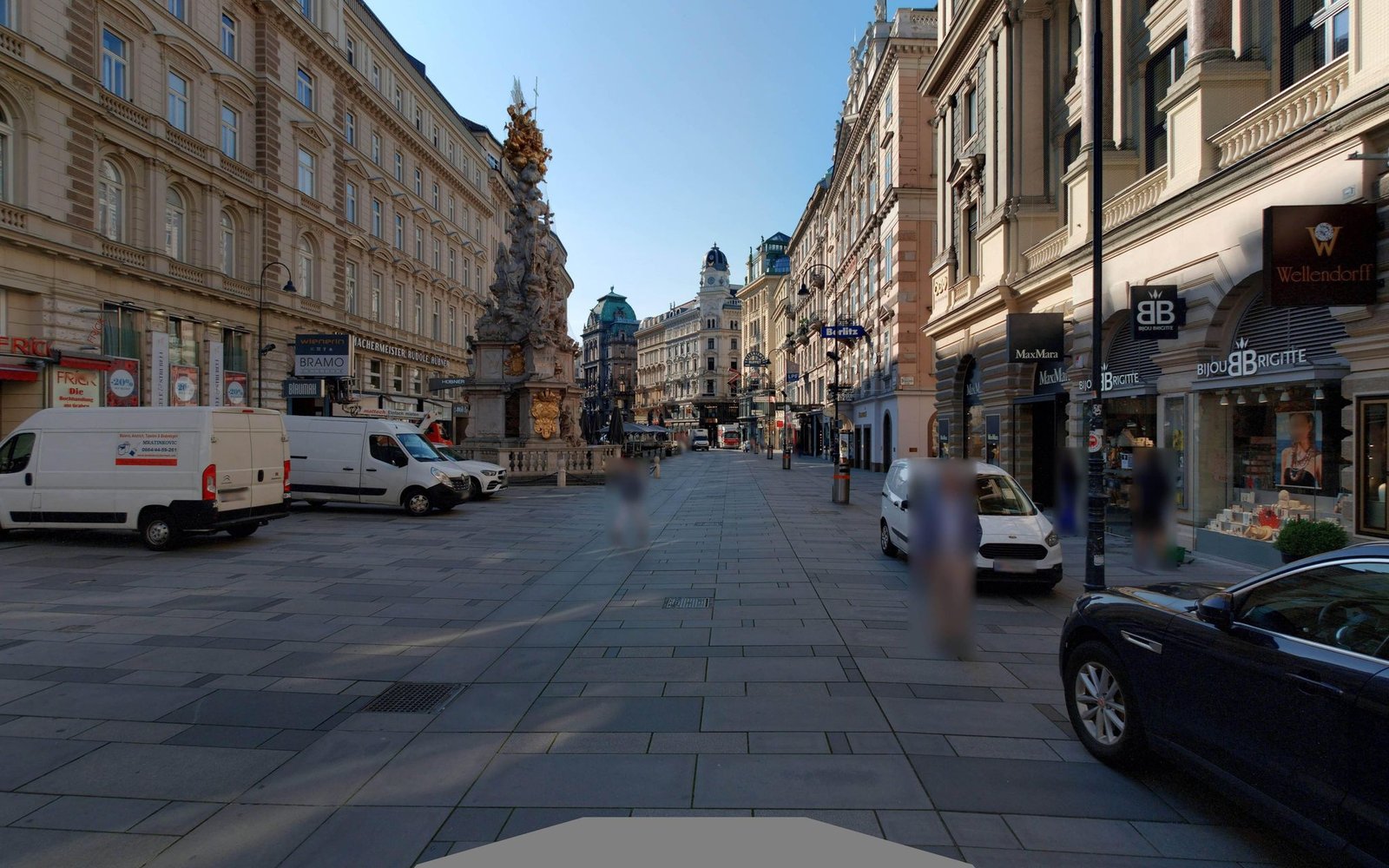
You've stepped out of the medieval city and into Vienna's Baroque front room. This is the Graben — the name means 'ditch,' because the street is laid right over the filled-in moat of the old Roman and medieval walls. There's nothing defensive about it now: it's a wide, elegant pedestrian boulevard, and it was how imperial Vienna showed off.
Walk out to the middle and you'll meet its centrepiece, rising in a froth of gilded clouds and angels — the Pestsäule, the Plague Column. The city raised it in thanks after the great plague of sixteen seventy-nine, and finished it in its present form in sixteen ninety-three. It is gratitude turned into Baroque theatre, and it's pure Vienna: even grief here is sculpted and gilded.
Now, the food. Toward the far, western end of the Graben is a name that fed the empire: Julius Meinl. The house began as a Viennese grocer back in eighteen sixty-two, and it changed the way the city drank by selling coffee already roasted — ready to brew at home — when everyone else still sold it raw. Its little Moor's-head logo became one of the most recognised marks in Central Europe. Meinl turned coffee and fine provisions into a Viennese institution, and that's our first lesson in how this city shopped for the good things.
Keep going to the west end of the Graben, and where the boulevard narrows, turn into the slim, elegant street heading toward the imperial palace. That's the Kohlmarkt — and it holds the sweetest window in Vienna.