Figlmüller
Since 1905 — the Wiener Schnitzel so wide it overhangs the plate.
Key facts
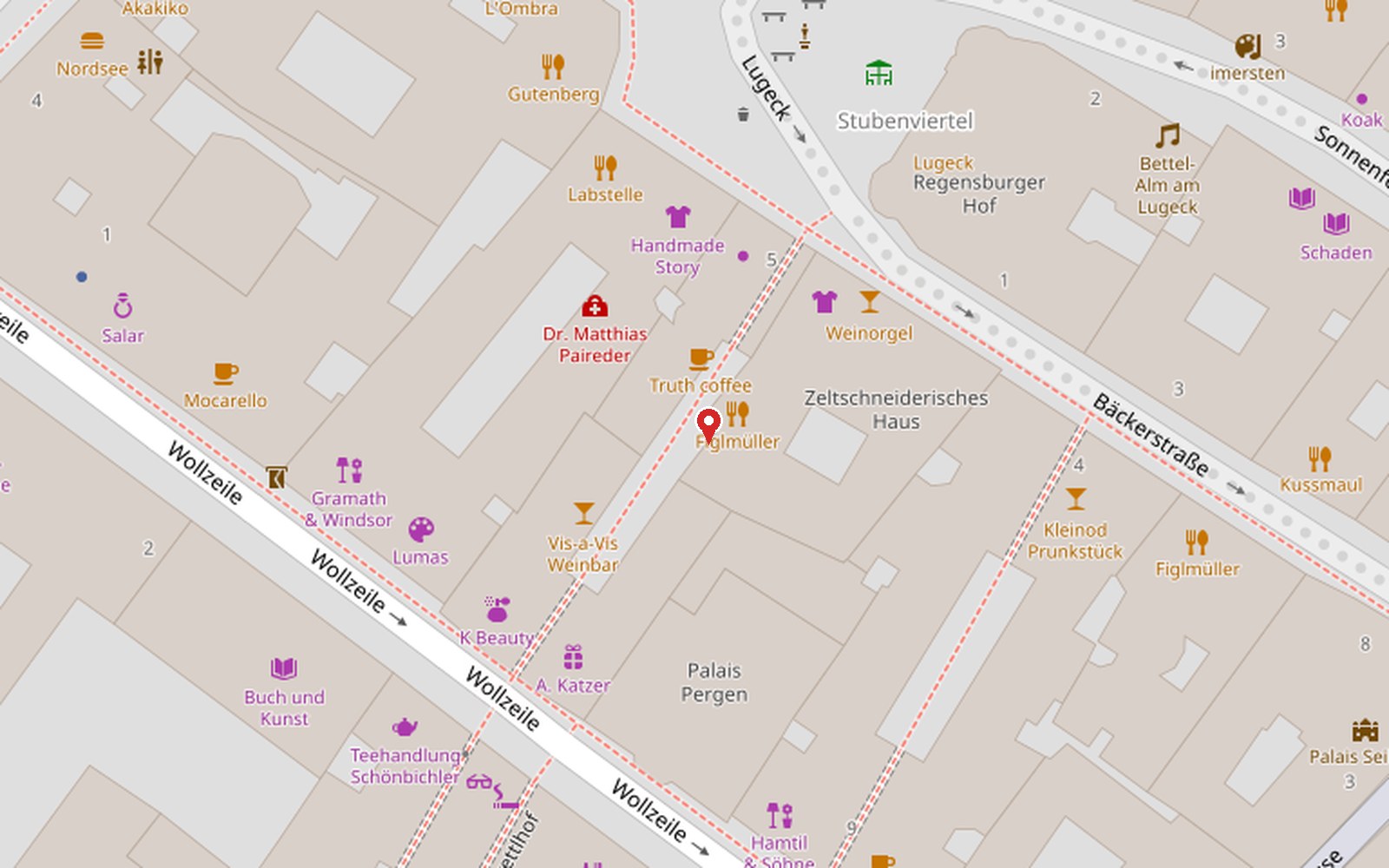
- Figlmüller opened on the Wollzeile in 1905 as a small wine tavern and has stayed in the same family for four generations.
- Its signature Wiener Schnitzel is pounded so thin and wide that it overhangs the plate, with a light crust that crackles when cut.
- By Austrian law a true Wiener Schnitzel is made of veal; the pork version must be labelled 'Schnitzel Wiener Art,' or Vienna-style.
Narration transcript
Just off the Wollzeile, up a little passage, is Figlmüller — and since nineteen oh five it has been serving the single most famous plate of food in Vienna. It started as a small wine tavern, run by the Figlmüller family, who are still running it four generations later. But what made it world-famous is the schnitzel.
A Wiener Schnitzel here is a spectacle before it's a meal. The cook takes a cutlet and pounds it out, thinner and thinner and wider and wider, until it's a vast golden wafer that hangs right over the edges of the plate in every direction. It's breaded so lightly that the crust puffs away from the meat and crackles when you cut into it. People come from all over the world, order one, and reach for their cameras before their forks.
Here's the thing worth knowing. A true Wiener Schnitzel, by Austrian law, is made of veal — that's the original, the genuine article. If it's made of pork, which is cheaper and very common, it legally has to be called something else: Schnitzel Wiener Art, 'Vienna-style.' So now you can read a menu like a local. This is Vienna taking one simple fried cutlet and turning it into a piece of its own identity.
From here, turn south and pick up the Kärntner Straße, the grand shopping street that runs down toward the Opera. We'll follow it through a quiet lane that hides some of the finest kitchens in the city.