Café Central
Vaulted marble, a Melange, a glass of water and a newspaper — the coffeehouse as living heritage.
Key facts
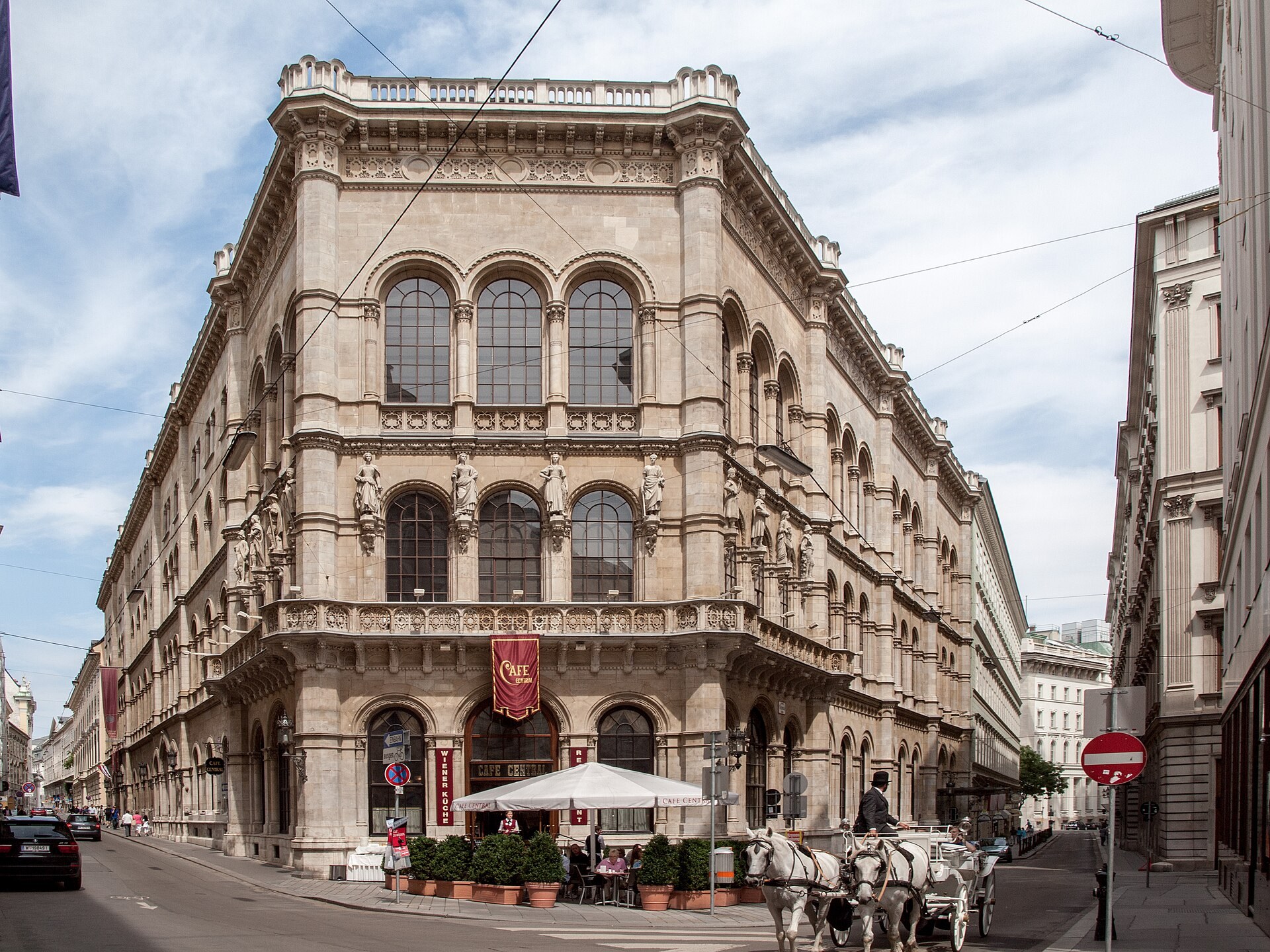
- Café Central opened in 1876 in the Palais Ferstel on Herrengasse and became a hub of Viennese intellectual life, frequented by writers, thinkers and chess-playing exiles.
- Viennese coffee-house culture was added to Austria's national inventory of intangible cultural heritage in 2011 — a protected ritual, not just a café.
- In the Viennese ritual, a Melange arrives with a glass of water, and the table is yours for as long as you like, newspapers included.
Narration transcript
Step inside — at least in your imagination — to the Café Central. It fills the ground floor of the Palais Ferstel, a grand nineteenth-century building on the Herrengasse, and it opened its doors as a coffeehouse in eighteen seventy-six. Look up at the vaulted arches and the marble columns: this was built as a palace, and it became a living room for the city's writers and thinkers. The poet Peter Altenberg practically lived here. Trotsky played chess at these tables. This is where fin-de-siècle Vienna argued, wrote and dreamed.
And here the food and the building truly become the same thing. The Viennese coffeehouse isn't just a café — it's a protected way of life. Austria added its coffeehouse culture to the national inventory of intangible cultural heritage back in twenty eleven: not a recipe, but a ritual. The listing describes it beautifully, as a place where, in its words, time and space are consumed, but only the coffee is found on the bill.
Here's how it works. You order a Melange — the Viennese cousin of the cappuccino — and it arrives with a small glass of water on a little silver tray. That glass of water is the signal: the table is yours. Sit. Read a newspaper from the wooden rack. Stay an hour, or three. Nobody will hurry you. The marble, the bentwood chairs, the unhurried time — that's the real dish here.
When you're ready to move, head back out and east, just a short block over to the Bognergasse. There's a shop there older than almost everything around it.