← Older Than It Looks Walking Tour
La Arcada Court
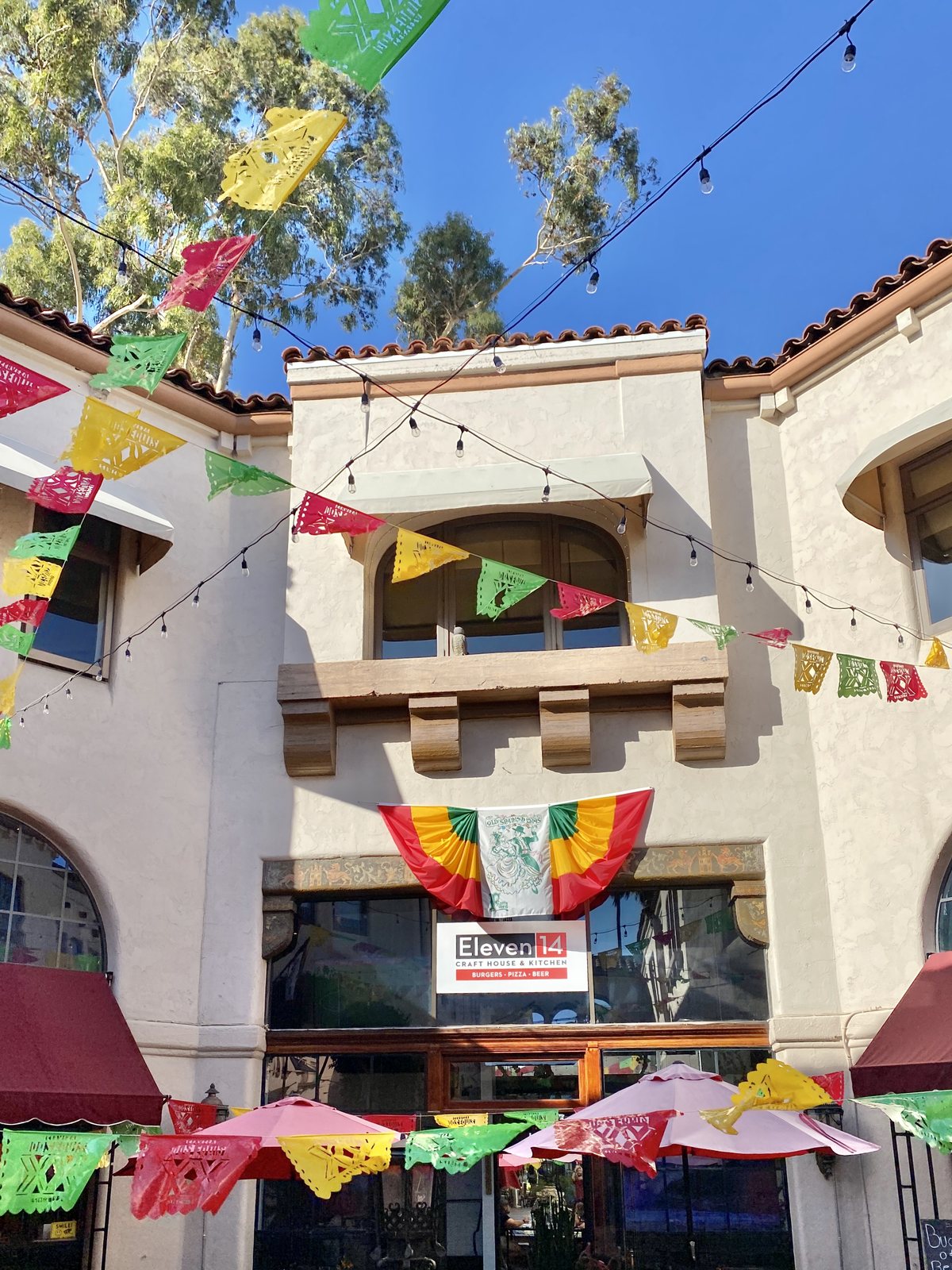
Retail built as architecture — a 1926 arcade of boutiques, a turtle fountain and bronze pranks.
Key facts
- Opened 1926 with Myron Hunt as consulting architect, on the site of a church lost in the 1925 quake
- Open-air Spanish-Colonial arcade holding 20+ boutiques, galleries and restaurants
- Turtle fountain and whimsical bronze sculptures, several by sculptor Bud Bottoms
- Built as retail architecture — a stage set for shopping, one year after the earthquake
Narration transcript
Step off the sidewalk and into La Arcada. Notice what just happened — the traffic noise drops, the light goes dappled, and you're in an open-air lane of little shopfronts, tiled and arched, with a fountain somewhere ahead. This isn't an old street that happened to fill with shops. It's the opposite: it was built, all at once, in 1926, to be exactly this.
And that's why it belongs on this walk. La Arcada went up just one year after the earthquake, designed with the architect Myron Hunt, on the rubble of a church the quake took down. The whole point was to make shopping feel like strolling a lane in Spain — specialty boutiques and galleries wrapped around a courtyard, more than twenty of them, so that the act of buying something came with a bit of theatre. Retail built as architecture. When you walk through a themed outdoor mall anywhere in America today, you're walking through La Arcada's grandchildren.
Look for the small delights people put here on purpose. There's a turtle fountain, and scattered around the courtyard are whimsical bronze figures — many by a local sculptor named Bud Bottoms — little jokes in metal you're meant to stumble on. A businessman on a bench. Creatures where you don't expect them. The place rewards looking down and around, not just into windows.
When you've wandered it, come back out to State Street and cross to Anacapa Street, one block inland — because the masterpiece of this whole rebuilt city is waiting a block up: the County Courthouse.