← Older Than It Looks Walking Tour
Casa de la Guerra & El Paseo
An 1820s comandante's adobe, and the 1920s "Street in Spain" built around it — one of California's first shopping courtyards.
Key facts
- Built in the 1820s as the home of José de la Guerra, fifth comandante of the Presidio
- El Paseo, the "Street in Spain" courtyard, begun 1922 around the restored adobe
- A pre-quake showpiece of the "New Spain" civic movement
- Often described as one of California's first open-air shopping courtyards
Narration transcript
Stand here on De la Guerra Street and look at the long, low adobe with the deep veranda. This is Casa de la Guerra, the home of José de la Guerra, who commanded the old Spanish fort — built in the 1820s, when this really was a small Spanish-Mexican town and not yet a performance of one. It's the genuine article: a comandante's house, now kept as a museum.
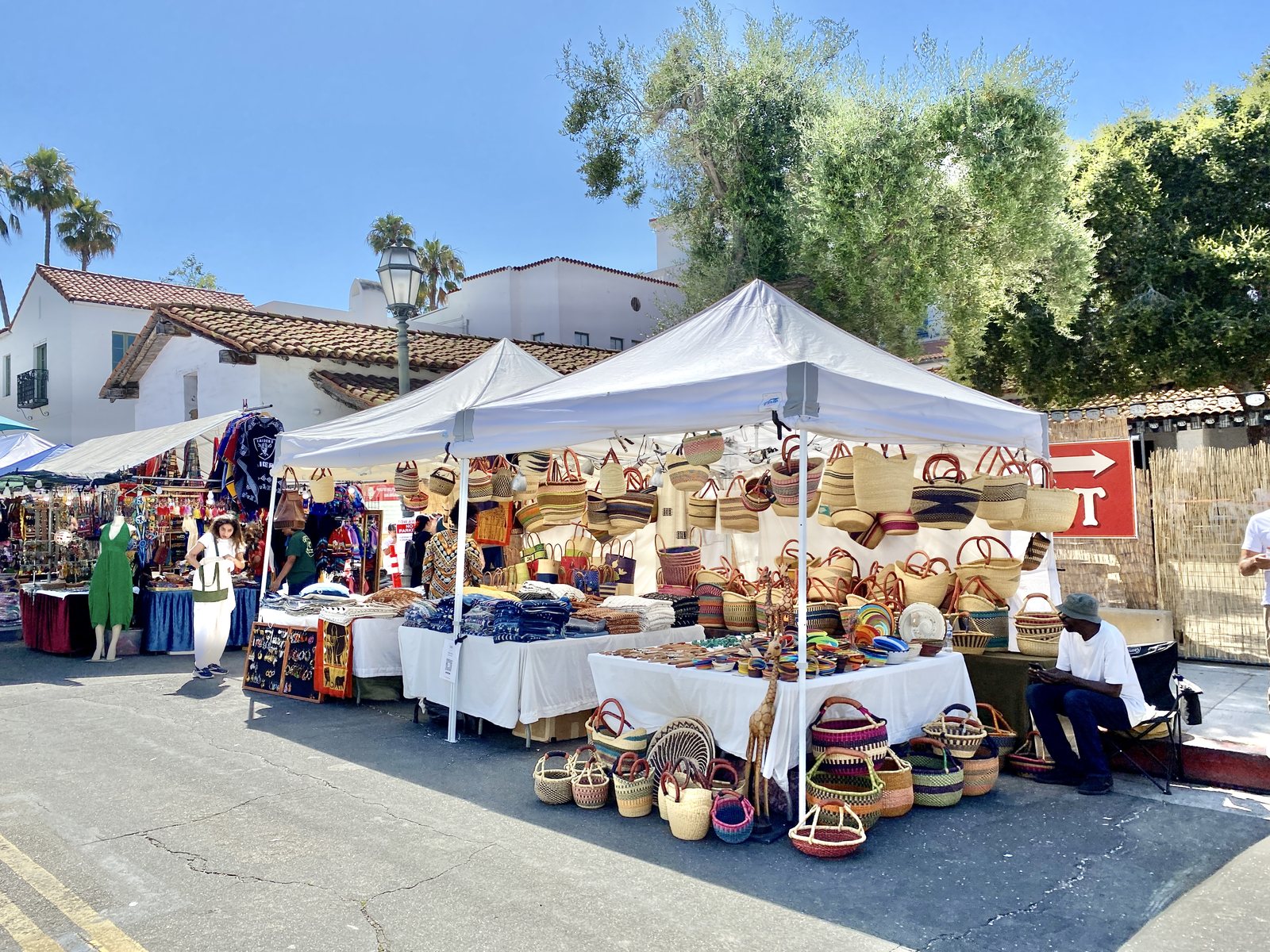
Now notice what grew up around it. Wrapped beside and behind the Casa is El Paseo — "the Street in Spain" — a shaded courtyard of shops and passages begun in 1922. And this is one of the most important things on the whole walk, because El Paseo came before the earthquake. The Spanish-revival style didn't start as emergency repair; it started as a deliberate movement, a group of Santa Barbarans in the early 1920s who wanted the town to look like a romantic New Spain — and El Paseo, built around this real old adobe, was their showpiece.
They basically invented something here: one of California's first open-air shopping courtyards, a place designed so that browsing shops felt like wandering a Spanish village lane. Every festival marketplace and themed courtyard that came after owes it a debt. Today those same rooms hold tasting rooms and galleries — commerce, still, in a stage set nearly a century old.
Take it in from the sidewalk. Then step just west — the courtyard opens toward De la Guerra Plaza, the town's civic heart, only a few paces on. Head for the open green.