← Lady Day's Philadelphia Tour
Philadelphia Clef Club of Jazz
Born from a segregated Black musicians' union — the first building in America built to be a jazz institution.
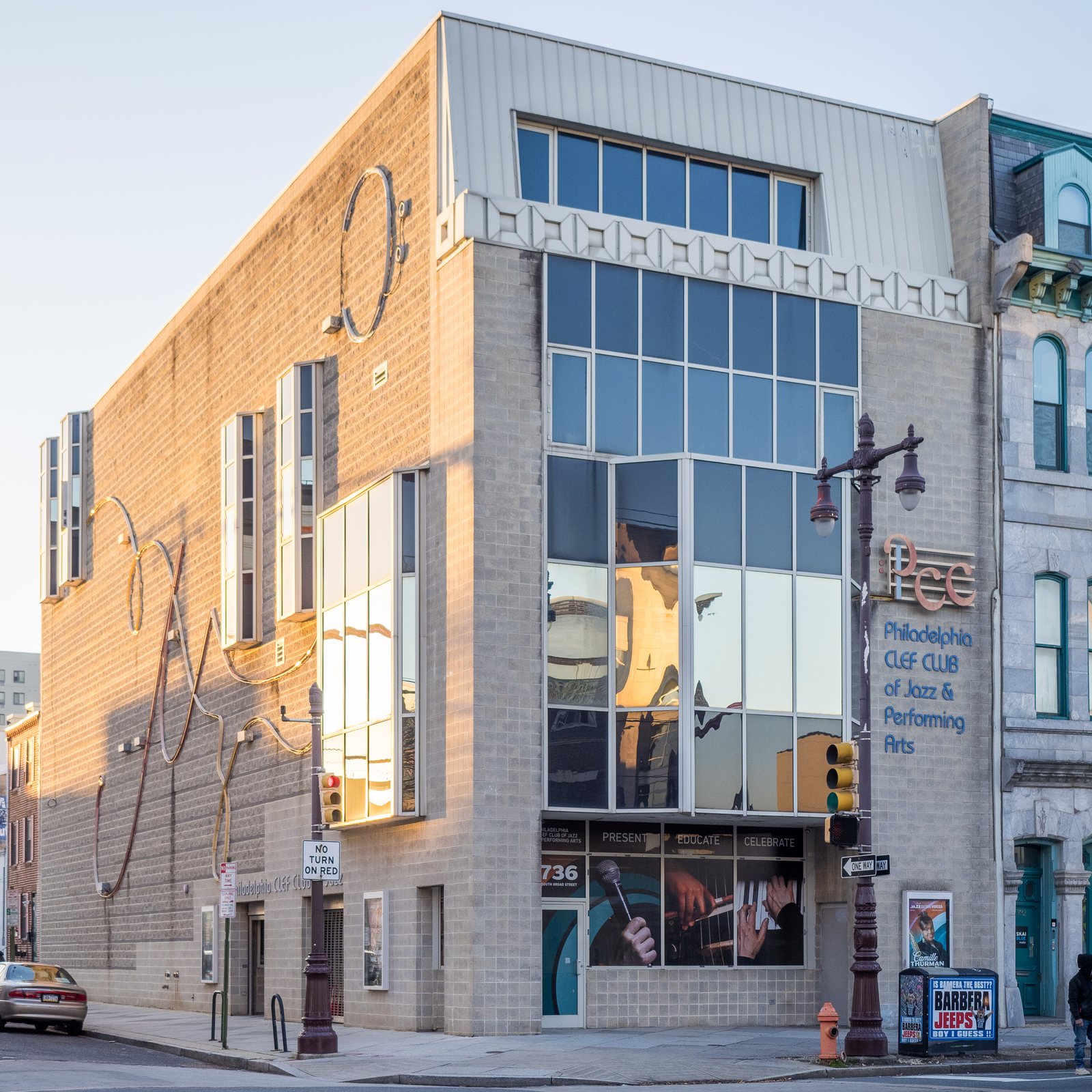
Key facts
- The Philadelphia Clef Club grew out of Local 274, the segregated Black musicians' union whose members included John Coltrane and Dizzy Gillespie
- Its purpose-built home at 736 S Broad, opened in 1995, is billed as the first facility built specifically as a jazz institution
- It anchors the Avenue of the Arts as a working institution — classrooms, a performance hall, and recording space — keeping the corridor's jazz alive rather than only commemorated
Narration transcript
A couple of blocks south on Broad, at 736, is the Philadelphia Clef Club of Jazz and Performing Arts — and it's here for a reason that connects everything you've seen. So much of this tour is about absence: theatres demolished, hotels erased, a great singer remembered mostly by what isn't marked. The Clef Club is the opposite. It's jazz Philadelphia, still standing, still teaching, still playing.
Its roots go back to something harder, though. For decades American musicians' unions were segregated, and Black players in Philadelphia had their own local — Local 274 — because the white local wouldn't have them. That union counted extraordinary names on its rolls; John Coltrane and Dizzy Gillespie carried its card. The Clef Club grew directly out of that community — musicians who organized themselves because the mainstream shut them out, and who built an institution that outlasted the segregation that made it necessary.
The building in front of you opened in 1995, and it makes a genuine claim to history: it's said to be the first facility anywhere in the country designed and built from the ground up specifically to be a jazz institution. Not a club that happened to book jazz, not a theatre repurposed — a purpose-built home for the music, with classrooms, a concert hall, and recording space inside.
So this is the stop where the story turns from memory to continuity. The clubs Billie Holiday worked are mostly gone. The music she helped carry is right here, being handed to the next players. Look up at the building for a moment; it's a monument that's still open for business. Our next stop is the last stage of her Philadelphia life. Walk west to 15th Street, then north to Bainbridge.