← Lady Day's Philadelphia Tour
Academy of Music
The grand hall on Broad — and the concert-stage comeback that followed prison.
Key facts
- The Academy of Music, opened in 1857, is the oldest opera house in the United States still used for its original purpose
- In March 1948, weeks after her release from Alderson, Holiday sold out a comeback concert at Carnegie Hall
- Specific Academy of Music dates are thinly sourced; this stop narrates the venue as comeback-era color, not a documented booking
Narration transcript
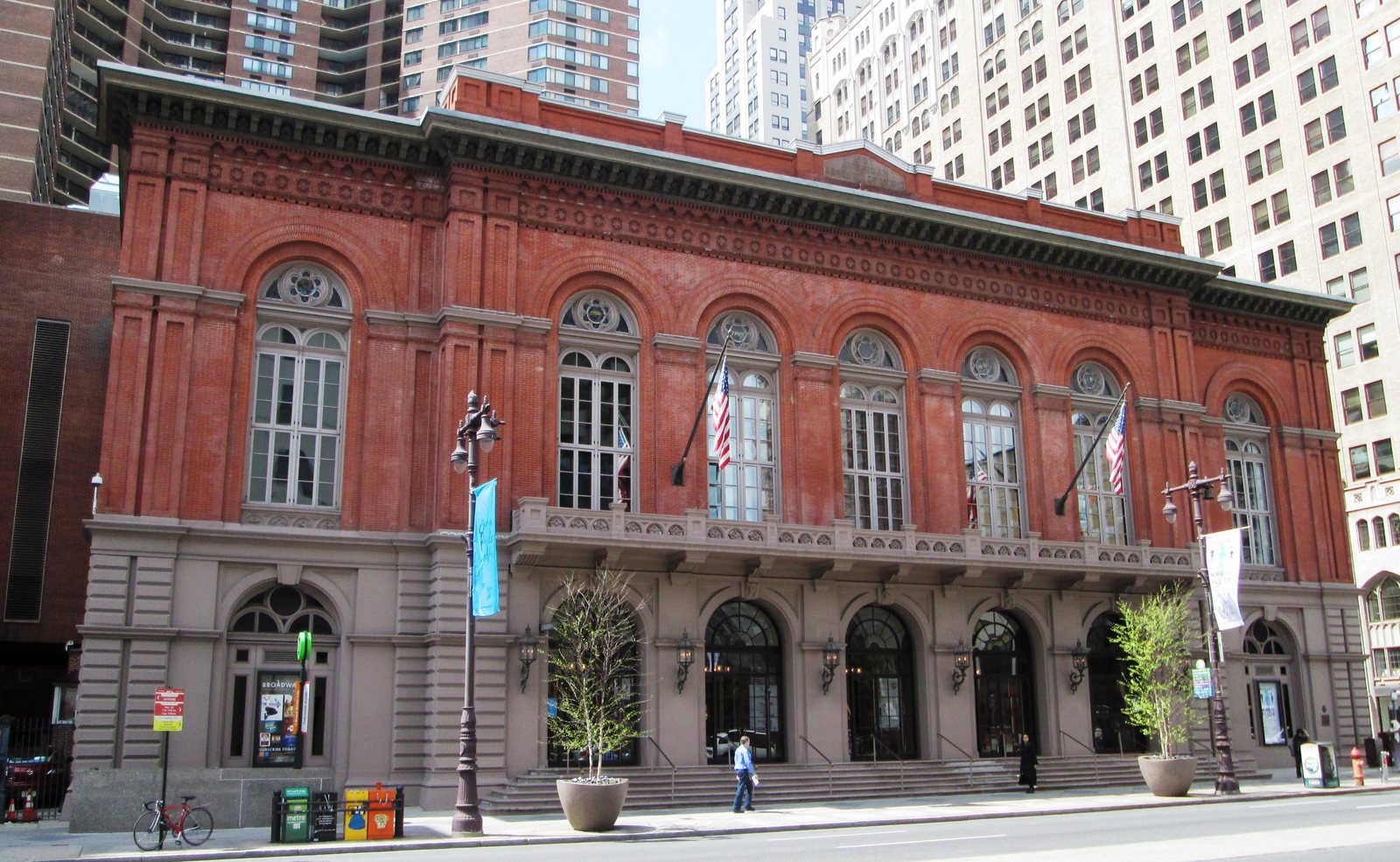
On your right is the Academy of Music, and even on a jazz walk it's worth stopping for. It opened in 1857, and it is the oldest opera house in America still doing exactly what it was built to do. Behind a plain brick exterior — deliberately plain, so the money went into the acoustics — is a red-and-gold horseshoe modeled on the great opera houses of Europe. Every kind of American music has passed through these doors.
We pause here for context, not for a ticket stub. In this era, a Black singer of Billie Holiday's stature crossing from smoky clubs onto a proper concert stage was itself a statement — and she made it, spectacularly. In March of 1948, only weeks out of the federal reformatory, still barred from New York's clubs by the loss of her cabaret card, she walked onto the stage of Carnegie Hall and sold it out. The woman the government had just imprisoned filled one of the most prestigious rooms in the country. It's one of the great comebacks in American music.
So as you look at this hall, hold the two images together: the concert stages that treated her as an artist, and the vice squads that treated her as a suspect. She lived inside that contradiction her whole career. Grand rooms like this one are where the artistry was honored; a few blocks from here are the rooms where it was policed.
The jazz corridor is just ahead. Continue south on Broad to Pine Street, then turn east on Pine. At 1330 — about a block and a half along — stood a hotel where, one February morning in 1956, Philadelphia came for her again.