Luxor
A 30-storey pyramid, elevators that climb at an angle, and the brightest light on Earth.
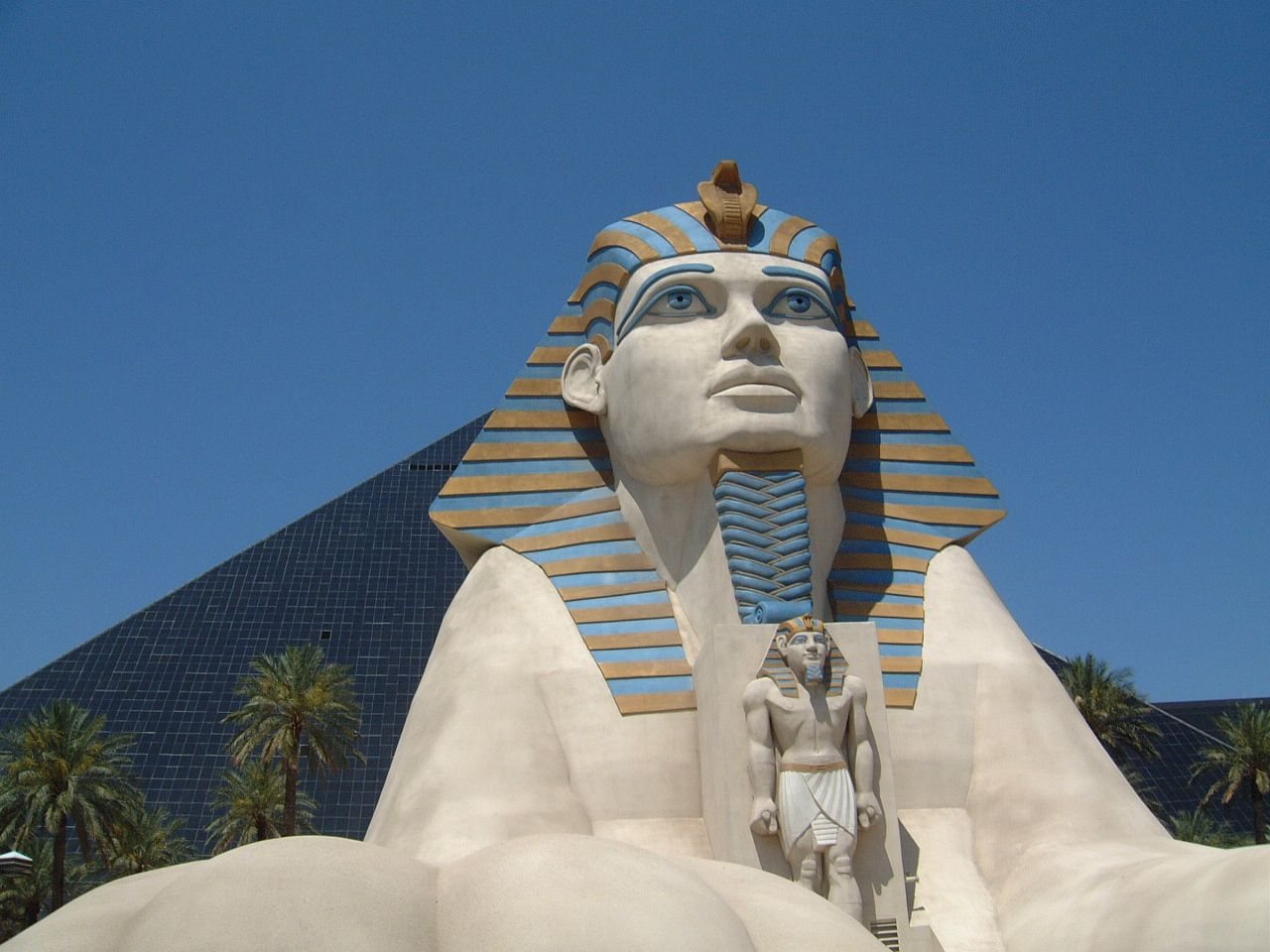
Key facts
- The Luxor opened in 1993 as a 30-storey black-glass pyramid; because the walls slope, its guest-room elevators — called “inclinators” — travel at an angle of roughly 39 degrees rather than straight up.
- The beam of light from the pyramid's apex, the Luxor Sky Beam, is produced by a bank of xenon lamps and is often described as the strongest beam of light in the world, visible to aircraft far from the city.
- The Sky Beam attracts insects, which draw bats and owls, creating a small nocturnal food-chain in the column of light — an effect widely reported about the beam.
Narration transcript
There it is on your left: a thirty-storey pyramid of black glass, a genuine Egyptian sphinx crouched out front, and after dark, a column of white light punching straight up from the very tip. That's the Luxor, opened in 1993, back in the era when every new resort had to be something — a pyramid, a castle, a city.
The pyramid shape creates a wonderful problem. You can't run a normal elevator up a slanted wall, so the Luxor's elevators — they call them “inclinators” — actually travel at an angle, about thirty-nine degrees, riding up the inside of the slope like a funicular.
And that beam at the top is not just for show. It's one of the most powerful beams of light on the planet, thrown up by a bank of xenon lamps, and pilots can see it from far out over the desert. Here's my favourite detail: the light attracts clouds of insects, and the insects draw both bats and owls — so the Luxor has accidentally built a tiny glowing ecosystem in the sky, hunting in a shaft of light above the Strip.
Keep rolling north. Just ahead on your left, the theme changes completely: first the turrets and pennants of a medieval castle, and right behind it, a compact little Manhattan skyline squeezed onto one city block.