Fremont Street crossing (Glitter Gulch)
Glitter Gulch — where the city was auctioned into being in 1905, and where Vegas Vic still waves.
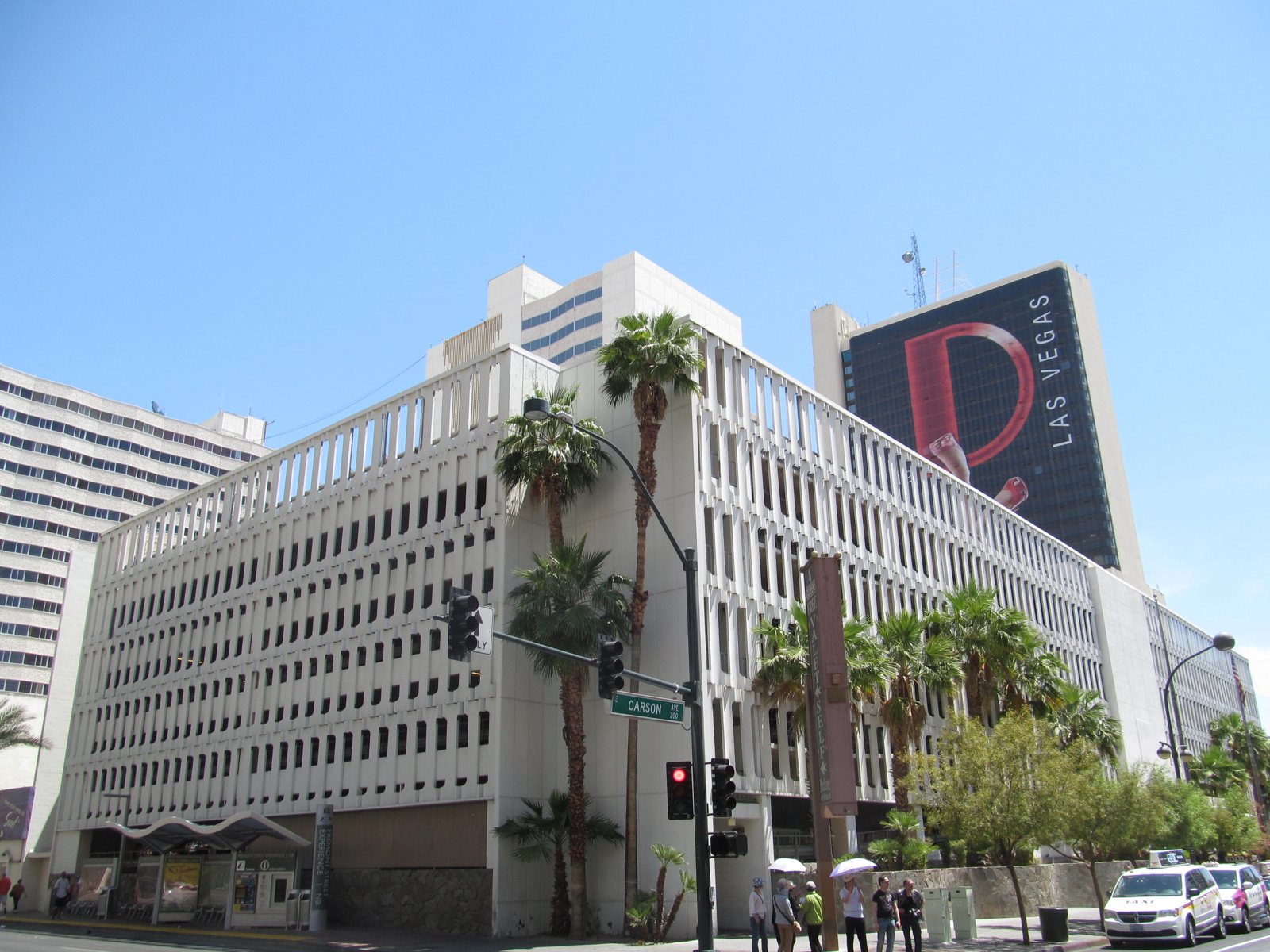
Key facts
- Las Vegas was founded when railroad land was auctioned on May 15, 1905, near the depot at what is now the Plaza hotel at the west end of Fremont Street.
- The Golden Gate, at 1 Fremont Street, dates to 1906, is often cited as the city's oldest hotel, held the town's first telephone (number 1), and popularized a 50-cent shrimp cocktail introduced in 1959.
- Vegas Vic, the neon waving cowboy sign, was installed over Fremont Street in 1951 and became an icon of “Glitter Gulch”; a well-known story claims his mechanical voice was silenced after actor Lee Marvin complained during a film shoot — usually told as legend.
- Fremont Street is closed to cars along the pedestrian mall, which was covered by the Fremont Street Experience canopy in 1995; the crossing at Las Vegas Boulevard is the viewpoint.
Narration transcript
You're crossing Fremont Street now — and this is a crossing, not a stop. The mall ahead is closed to cars, so the view is the reward: glance to your left, down that long canyon of neon under the arched canopy. That's Glitter Gulch, old downtown, and it is where the entire city of Las Vegas was actually born. Keep rolling, and let your passenger do the gawking.
Everything you've driven today grew out of one afternoon right here. On the fifteenth of May, 1905, the railroad auctioned off its land beside the depot — that's the spot at the far end where the Plaza stands now — and just like that, a town existed. The auction was the founding.
Down that street is the Golden Gate, from 1906, usually called the oldest hotel in the city. It had the town's very first telephone — literally number one — and it made its name on a fifty-cent shrimp cocktail that fed budget gamblers for generations. And somewhere in that glow, if you can spot him, is Vegas Vic, the giant neon cowboy who's been waving over Fremont Street since 1951. The story goes that his booming mechanical “Howdy, partner” got switched off after the actor Lee Marvin, filming nearby, got fed up with the noise — but treat that one as a tall tale, because that's how it's always told.
This is the Vegas that existed long before the mega-resorts: sawdust joints, the early World Series of Poker, hand-painted signs, the whole place lit up like a jewelry box. The famous canopy overhead went up in 1995 and turned the street into one enormous light show.
Keep heading north on Las Vegas Boulevard. Two blocks up is Stewart Avenue — and when you reach it, look to your left. A couple of blocks off the Boulevard sits a stately old courthouse that now tells the story of the men who really built this town: the Mob Museum.