Huntridge Theater + John S. Park Historic District
The city's first real suburb, its Streamline-Moderne movie palace — dark since 2004, and still waiting.
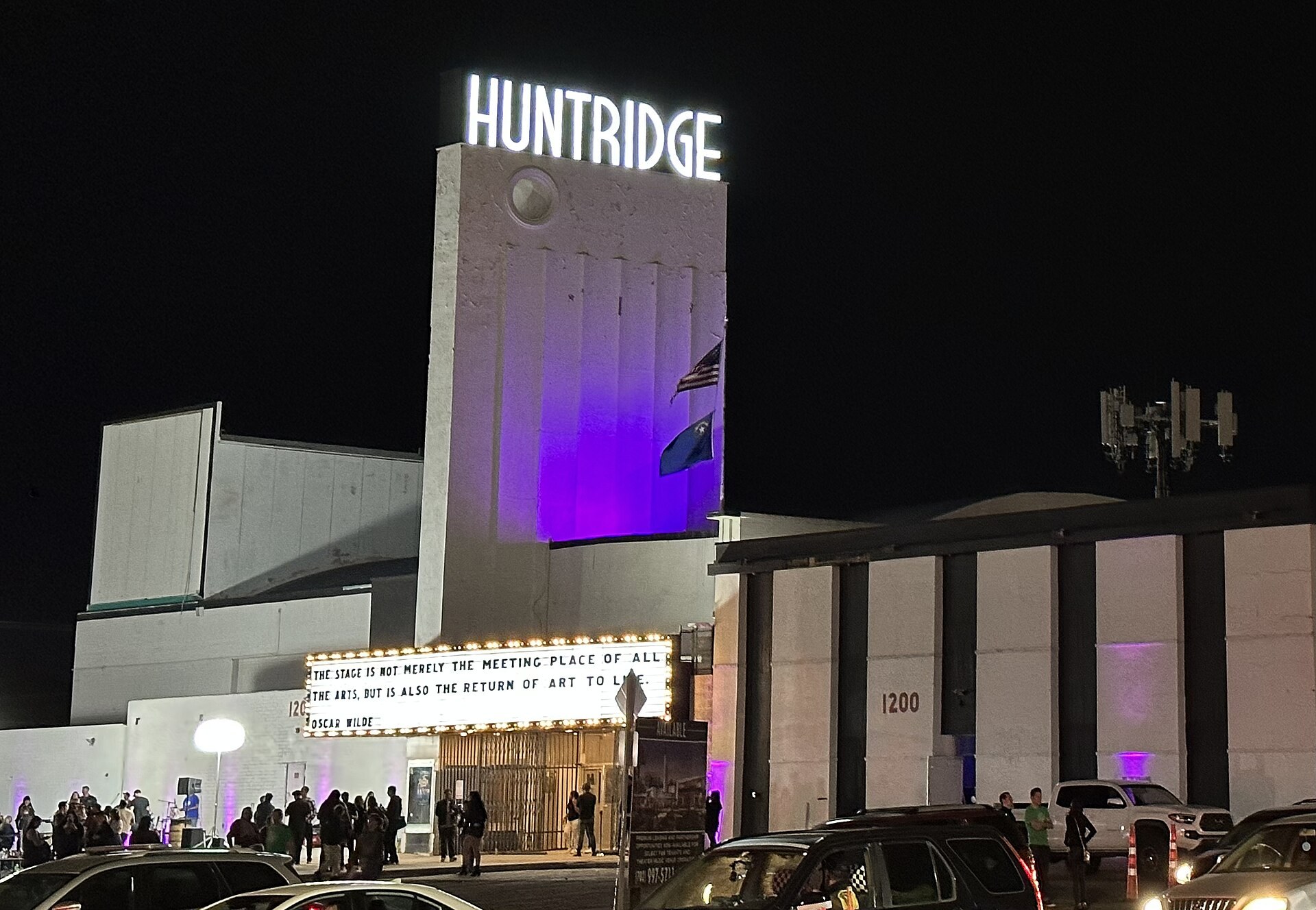
Key facts
- Huntridge was Las Vegas's first tract subdivision, developed 1941–1944 on land named for owner Leigh Hunt, and laid out to FHA standards (one of three WWII-era FHA projects) with ranch / Minimal Traditional homes, a park, a school and a commercial center.
- The Huntridge Theater (1208 E Charleston) opened October 10, 1944, a Streamline Moderne movie house designed by architect S. Charles Lee; it was listed on the National Register in 1993.
- It later became a concert venue but closed July 31, 2004 and sat vacant; Dapper Companies bought it in 2021 and relit the marquee in April 2023, but as of March 2026 restoration is stalled in pre-construction (an on-site cell tower dispute) — it is not reopened.
- Just south and west, the John S. Park Historic District (NRHP-listed 2003) is the city's oldest historic residential district — period-revival, bungalow and ranch homes from the 1930s onward; these are private residences.
Narration transcript
At Charleston and Maryland, look right: the tall, curved Streamline sign of the Huntridge Theater. It opened in 1944 — sleek, aerodynamic lines, the future as Hollywood imagined it — designed by S. Charles Lee, one of the great theater architects. For generations it was the neighborhood movie house, and later a legendary concert hall.
But be honest about what you're seeing. The Huntridge has been dark since 2004. It's been bought, its marquee has been relit, and there are real plans to bring it back — but as of now the restoration is stalled, and the doors are still closed. It's a landmark holding its breath.
The neighborhood around it matters just as much. This is Huntridge — built in the early 1940s as the first true suburb in Las Vegas, planned block by block with federal FHA loans so ordinary working families could own a home. Just to your right lies the John S. Park district, the oldest historic neighborhood in the city.
One thing, please: these are people's homes, lived in today. Drive slowly, and don't stop or photograph residents. Admire from the car.
Now follow Maryland Parkway south — the same road that a university grew up along.