← Daly City & South SF Driving Tour
Skyline Drive — Little Boxes
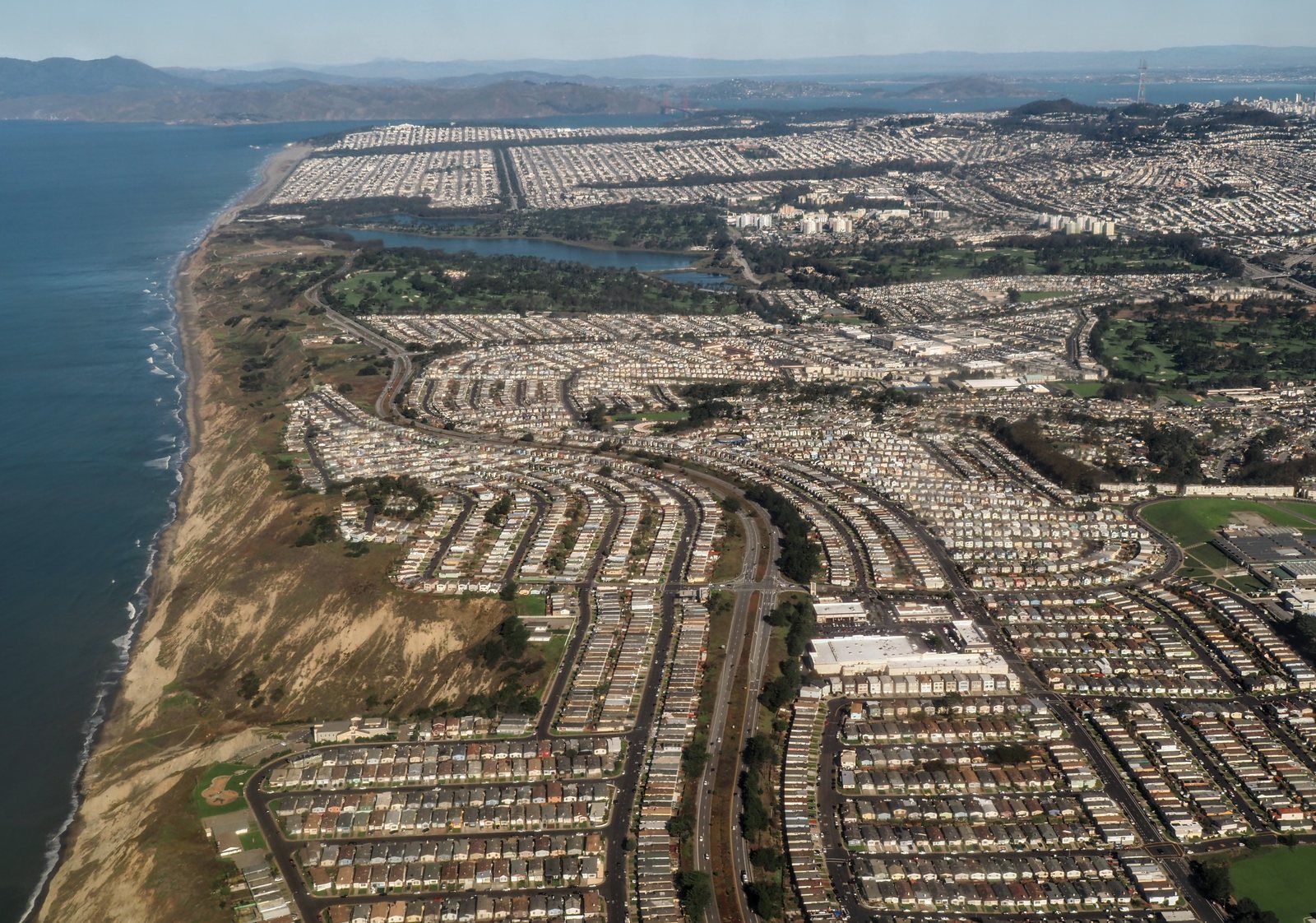
Drive-by — the hillside of near-identical houses that gave the world “Little Boxes.”
Key facts
- Henry Doelger bought about 1,350 acres and built Westlake, 1948–1962
- Mass-produced houses on interchangeable plans — “the Henry Ford of Housing”
- Malvina Reynolds wrote “Little Boxes” in 1962 while riding through Daly City
- Pete Seeger's 1963 recording reached No. 70 on the Billboard Hot 100
- Once mocked as “ticky-tacky,” the houses are now upper-middle-class real estate
Narration transcript
Look up the hillside to your left as we climb — row after row of houses, near-identical, stepping up the slope in pastel ranks. You are looking at the birthplace of one of the most famous protest songs ever written, and you're seeing it exactly the way she did.
This is Westlake, built by a man named Henry Doelger. After the war, San Francisco had a housing shortage it couldn't solve, so Doelger bought thirteen hundred acres of old farmland down here and built a whole suburb on it — houses on interchangeable floor plans, framed from his own on-site lumber mill, going up so fast that people called him “the Henry Ford of Housing.” Between 1948 and the early sixties, this bare hillside filled in completely.
In 1962, a folk singer named Malvina Reynolds was riding through Daly City, her husband at the wheel, on their way south to a meeting in La Honda. She looked up at these hills — at exactly this view — turned to him and said, “take the wheel, I feel a song coming on.” By the time they got there she'd written “Little Boxes”: little boxes on the hillside, little boxes made of ticky-tacky, and they all look just the same. Pete Seeger recorded it and put it on the charts; it became shorthand for postwar conformity the world over.
Here's the twist her daughter loved to point out: by the time reporters came looking for “the” little boxes to photograph, the hills were so completely built out they couldn't tell which houses she'd meant. And today? These modest boxes are worth well over a million dollars each. The song mocked them as cheap and identical; the market decided they were priceless. When you have a moment out of the car, give her own recording a listen — the link's on this stop's page.
Song heard here
▶ Little Boxes — Malvina Reynolds (Malvina Reynolds - Topic) ↗