← Daly City & South SF Driving Tour
Grand Avenue Historic Downtown
Stop — the main street of the company town the “Beef Trust” built, now feeding a workforce that pipettes instead of packs.
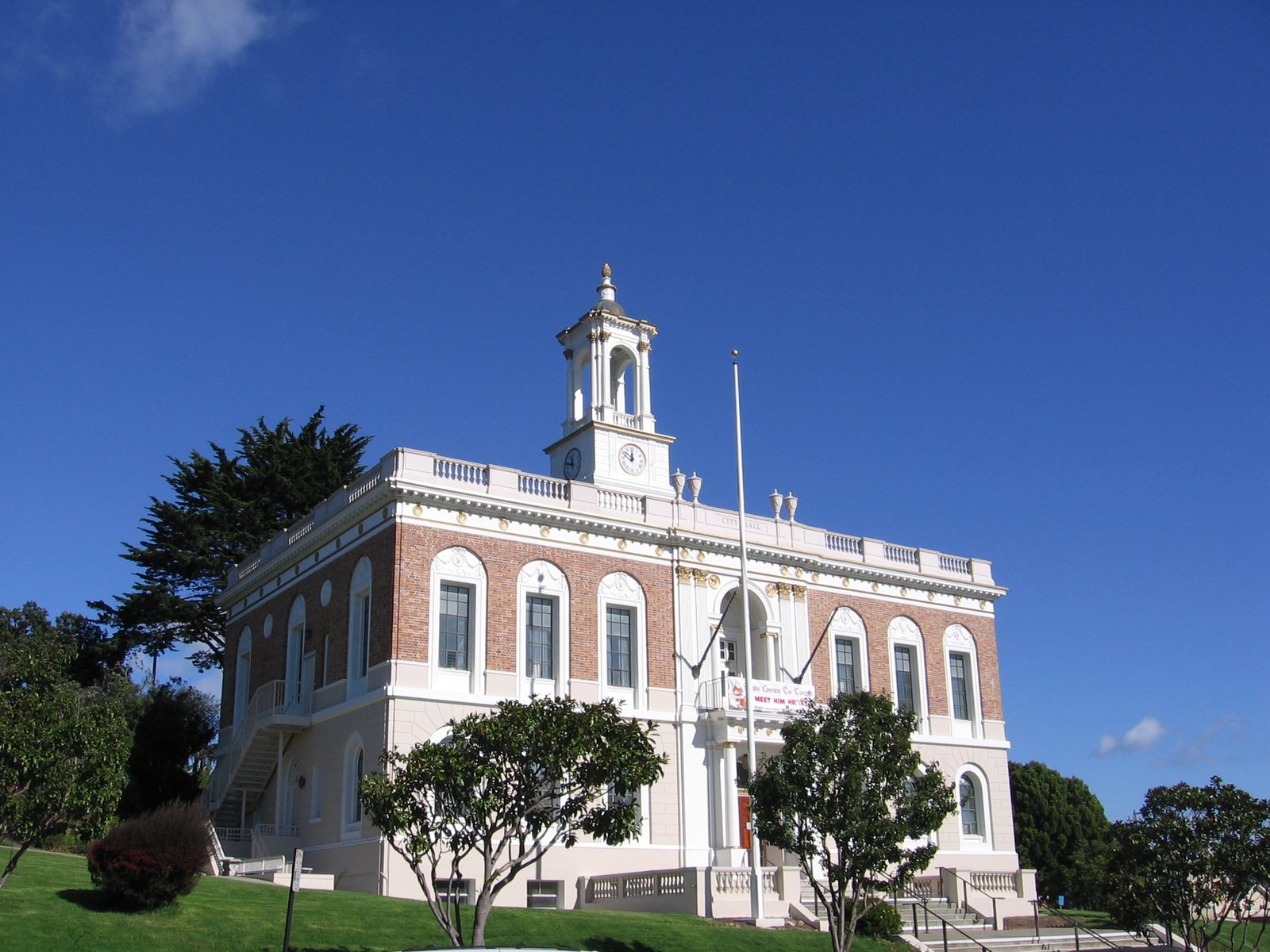
Key facts
- South San Francisco Land and Improvement Co. incorporated 1890 for a meatpacking site
- Gustavus Swift's Western Meat Company opened on the bayfront in 1892
- City incorporated 1908; steel industry and, later, wartime shipyards followed
- 1920 City Hall is the city's designated Historic Resource No. 1
Narration transcript
Park where you can along Grand Avenue and take a walk down it, because this modest main street is the front door of a town that was, quite literally, manufactured. South San Francisco wasn't a village that grew — it was a business plan. In 1890 a company was incorporated for the express purpose of building a meatpacking center on the bay flats down there, bankrolled by the Chicago packing giants people called the “Beef Trust.” They put the slaughterhouses on the water, and they laid out this grid of streets to house the men who'd work them.
Grand Avenue is where those workers spent their pay. The 1920 City Hall still presides a block from here — the town's designated Historic Resource Number One, from the era when this was a place that killed and canned and shipped. After the meatpacking came steel, and then, in the Second World War, shipyards that launched vessels sideways into the bay because the basin was too narrow to do it any other way. For most of a century, everything about this street smelled of industry.
Walk it now and look in the windows. The storefronts feed a very different workforce — because the flat cheap land by the bay that once drew the meatpackers drew something else entirely in our own time, and it's the last act of this whole drive. The people getting lunch on Grand Avenue today are as likely to spend their afternoons with a pipette as a cleaver. Same street, same logic — cheap land next to a big city — completely different century. Back in the car; we're heading down onto those bay flats to see what replaced the slaughterhouses.